
What is BTU in Grills?
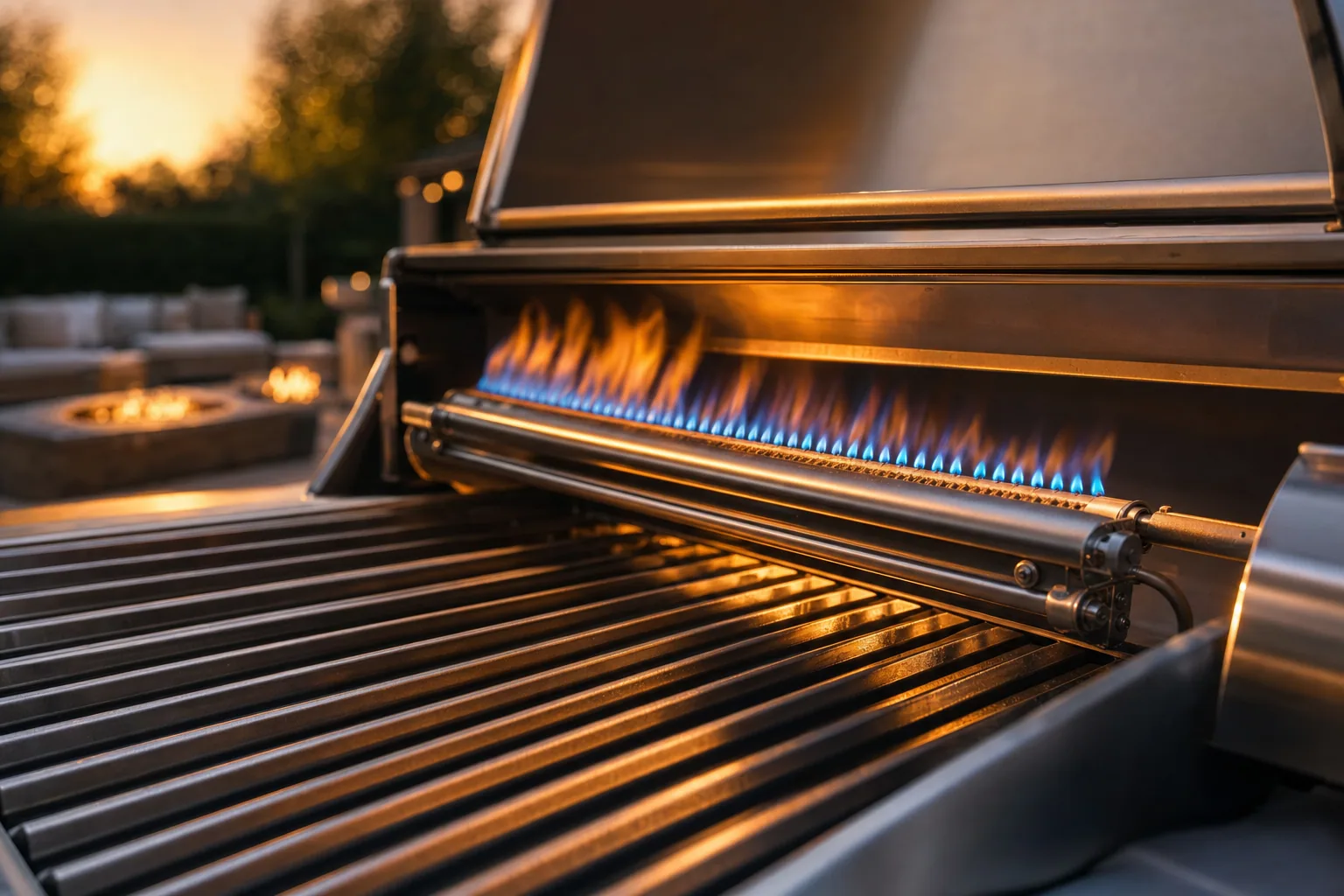
BTU stands for British Thermal Unit, and it measures the amount of heat energy a grill produces. One BTU is the energy required to raise the temperature of one pound of water by one degree Fahrenheit. When you see a grill's BTU rating, you're looking at an estimate of how much heat that grill can generate per hour.
Manufacturers calculate BTU by measuring the gas flow through the burners and the energy content of that gas. A grill with 60,000 BTU can theoretically produce more total heat than one with 40,000 BTU. However, BTU is just one piece of the puzzle when figuring out if a grill is right for you.
How Much BTU Do I Need?
The answer depends on several factors: how many people you typically cook for, what you like to cook, and how quickly you want your grill to reach temperature.
For a typical backyard setup serving a family of four to six, a grill with 40,000 to 60,000 BTU is usually sufficient. If you entertain larger groups regularly or want the ability to sear steaks at extremely high heat, you might want 60,000 BTU or higher. Smaller portable grills or those designed for limited spaces may work well at 30,000 to 40,000 BTU.
It's also worth considering that bigger isn't always better. A smaller grill with 40,000 BTU can reach and maintain cooking temperature just as effectively as a larger one with 60,000 BTU, especially if you're only using part of the cooking surface. The real advantage of higher BTU shows up when you want rapid heat recovery after opening the lid, simultaneous high-heat searing on multiple burners, or the flexibility to cook different foods at different temperatures across your grill.
BTU Alone Doesn't Tell the Whole Story
Heat output is important, but grill quality involves much more than raw BTU numbers. A well-insulated grill with efficient burners and quality construction will cook better and more evenly than a poorly made grill with high BTU. This is where features like infrared burners, which concentrate heat more efficiently, and precision temperature controls make a real difference.
When comparing grills, look at the build materials, burner design, and whether the manufacturer backs the product with a solid warranty. At Prime Grill Shop, we carry premium brands like Napoleon, Summerset, and Memphis Grills, all of which combine solid BTU ratings with excellent engineering and full manufacturer warranties.
Different Burner Types and Heat Delivery
The way a grill delivers heat matters as much as the total BTU output. Standard gas burners spread heat across the cooking area, while infrared burners concentrate heat more intensely. Infrared technology is excellent for high-heat searing because it directs energy downward toward the food rather than heating the air around it.
Many premium grills feature infrared side or rear burners in addition to standard main burners. This gives you cooking flexibility: use the main burners for standard grilling and the infrared burner for searing steaks or warming sides. The combination approach lets you work with both steady, moderate heat and intense, focused heat without compromising either function.
Finding the Right BTU Range for Your Cooking Style
Consider what you actually grill most often. If you're primarily cooking burgers, chicken, and vegetables for family dinners, you probably don't need the highest BTU on the market. But if you love high-heat searing, want to maintain consistent temperature across a large cooking surface, or frequently cook for groups of 10 or more, higher BTU becomes more practical.
Here's a simple breakdown:
- 30,000 to 40,000 BTU: Small to medium grills, couples or small families, limited space
- 40,000 to 60,000 BTU: Medium to large grills, families of four to eight, versatile cooking
- 60,000 BTU and above: Large grills, frequent entertaining, multiple burners and zones, high-heat searing capability
Remember that each burner section typically has its own BTU rating. A grill might have main burners rated at 60,000 BTU total plus a separate side burner at 12,000 BTU. This modular approach gives you control and efficiency.
How to Use This Information When Shopping
When you're evaluating grills, ask how much BTU you need based on your cooking habits, not based on wanting the highest number. A reputable retailer should help you match the grill's capabilities to your real needs. At Prime Grill Shop, we focus on helping homeowners find equipment that fits their entertaining style, backed by free shipping, hassle-free returns, and U.S.-based customer support.
Write down what matters to you: cooking surface size, whether you want infrared burners, how many separate heat zones you need, and how often you'll be cooking. Then match those priorities to a grill's BTU rating and overall design. You'll end up with equipment that actually works for your backyard, not just a grill with the biggest number on the spec sheet.
Final Thoughts
BTU is a useful starting point for comparing grills, but it's not the only factor that determines cooking performance or satisfaction. Quality construction, thoughtful burner design, and reliable customer support matter just as much. When you're ready to invest in premium outdoor cooking equipment, focus on finding a grill that matches your cooking needs and comes from a brand you trust. That combination of the right heat output, solid engineering, and great service is what turns backyard cooking into unforgettable experiences with family and friends.