
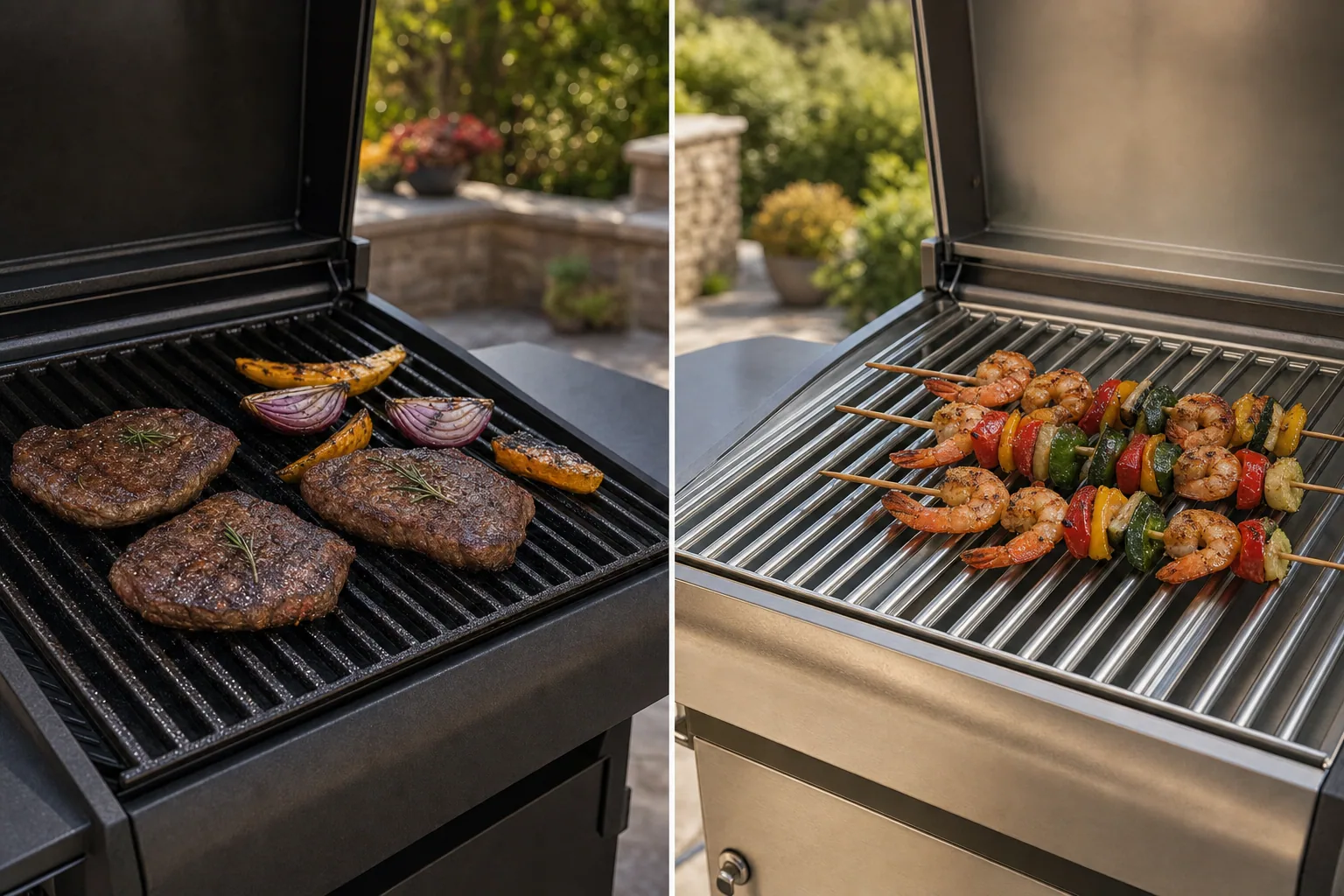
When you're shopping for a premium grill or planning to upgrade your cooking surface, the material of your grill grates matters more than you might think. The two most common options are cast iron and stainless steel, and each has distinct advantages depending on your cooking style, maintenance preferences, and long-term goals. Understanding the differences between cast iron vs stainless steel grates will help you make a choice that matches both your budget and your backyard entertaining vision.
Cast Iron vs Stainless Steel Grates: The Core Differences
At first glance, cast iron and stainless steel grates look similar, but they perform very differently. Cast iron is a heavier, porous metal that absorbs and retains heat exceptionally well. Stainless steel, on the other hand, is a non-porous, corrosion-resistant alloy that conducts heat more evenly and resists rust naturally.
These material properties shape everything from how your food cooks to how much time you'll spend maintaining your grates. The "best grill gates" for your setup depend on balancing performance, durability, and the lifestyle you want when entertaining.
Heat Retention and Cooking Performance
Cast iron excels at one thing above all else: holding heat. Once seasoned properly, cast iron grates absorb intense heat and maintain it consistently, creating those perfect sear marks and caramelization your guests will notice. This makes cast iron ideal if you prioritize high-heat cooking and want impressive crust on steaks or vegetables.
Stainless steel conducts heat more uniformly across the surface but doesn't retain it quite as intensely. However, this can be an advantage if you cook a variety of foods at different temperatures during the same session. Stainless steel won't create hot spots as easily, making it more forgiving for beginners and better for delicate items like fish.
Durability and Longevity
Cast iron is remarkably durable when maintained correctly. A well-seasoned cast iron grate can last decades, even a lifetime. The downside is that it requires ongoing care. Without proper seasoning, cast iron will rust and deteriorate, particularly in humid or salty climates.
Stainless steel requires far less maintenance to stay looking new. It naturally resists rust and corrosion, so you can leave your grill exposed to weather without the same level of worry. Premium grades of stainless steel, such as 304 or 316, are particularly resistant to salt-air corrosion. This makes stainless steel an excellent choice for anyone who doesn't want to fuss with seasoning or restoration.
Maintenance and Cleaning
This is where the two materials diverge most noticeably. Cast iron demands a specific care routine to maintain its seasoning and prevent rust. After each use, you should:
- Clean while still warm with a brush and minimal soap
- Dry completely with a towel
- Apply a thin coat of high-heat oil to maintain the seasoning layer
- Store in a dry environment
Neglect any of these steps, and rust can develop quickly, especially in damp climates.
Stainless steel is much more forgiving. A basic rinse after cooking and occasional cleaning with stainless steel cleaner keeps it looking pristine. There's no seasoning process required, and you don't need to worry about rust formation. This lower barrier to entry appeals to many homeowners who want a premium grill without the commitment of seasonal maintenance.
Flavor and Seasoning Effects
One reason experienced grillers prefer cast iron is the seasoning layer. Over time, cast iron develops a dark, patina-like coating that imparts subtle depth to grilled foods. This seasoning acts like a non-stick surface and contributes to the distinctive flavor profile cast iron enthusiasts love.
Stainless steel doesn't develop this seasoning layer. It remains neutral, which some prefer because it won't introduce any metallic notes. Your food will taste like the food, not like the grate. For purists who want complete control over flavor through marinades and rubs, stainless steel offers that neutrality.
Cost Considerations
Cast iron grates are typically less expensive upfront than premium stainless steel options. This makes cast iron attractive if you're budget-conscious and willing to invest time in maintenance.
Stainless steel costs more initially, but the lower maintenance burden means you're paying for convenience and peace of mind. When you factor in the effort and occasional replacements cast iron may require, the total cost of ownership can be similar.
Which Material Should You Choose?
Your ideal grill grate material depends on your priorities:
Choose cast iron if you:
- Cook frequently and want maximum heat retention
- Enjoy the ritual of maintaining and seasoning your grill
- Live in a dry climate where rust is less of a concern
- Value the traditional grilling experience and flavors
- Want to minimize upfront costs
Choose stainless steel if you:
- Prefer low-maintenance outdoor cooking
- Live in a humid, coastal, or rainy climate
- Want your grill to look pristine season after season
- Value convenience and long-term durability without seasoning
- Plan to use your grill year-round without indoor storage
Many premium grills from brands like Napoleon and Summerset offer both options, so you can choose based on your cooking style and maintenance preferences. When shopping for your next grill, ask whether grill grate types are upgradeable or replaceable, in case your preferences change over time.
Getting Expert Guidance on Your Grate Choice
Choosingbetween cast iron and stainless steel grates is just one decision in planning your outdoor kitchen. If you're feeling overwhelmed by all the options, Prime Grill Shop is here to help. Our U.S.-based customer support team and AI product expert can discuss your climate, cooking style, and entertaining goals to recommend the right grill and grate combination for you.
With free shipping, full manufacturer warranties, and personalized guidance, buying a premium grill should feel like an investment in shared experiences, not a stressful purchase. Call us at (720) 600-7228 to talk through your needs and find the perfect setup for your backyard.