
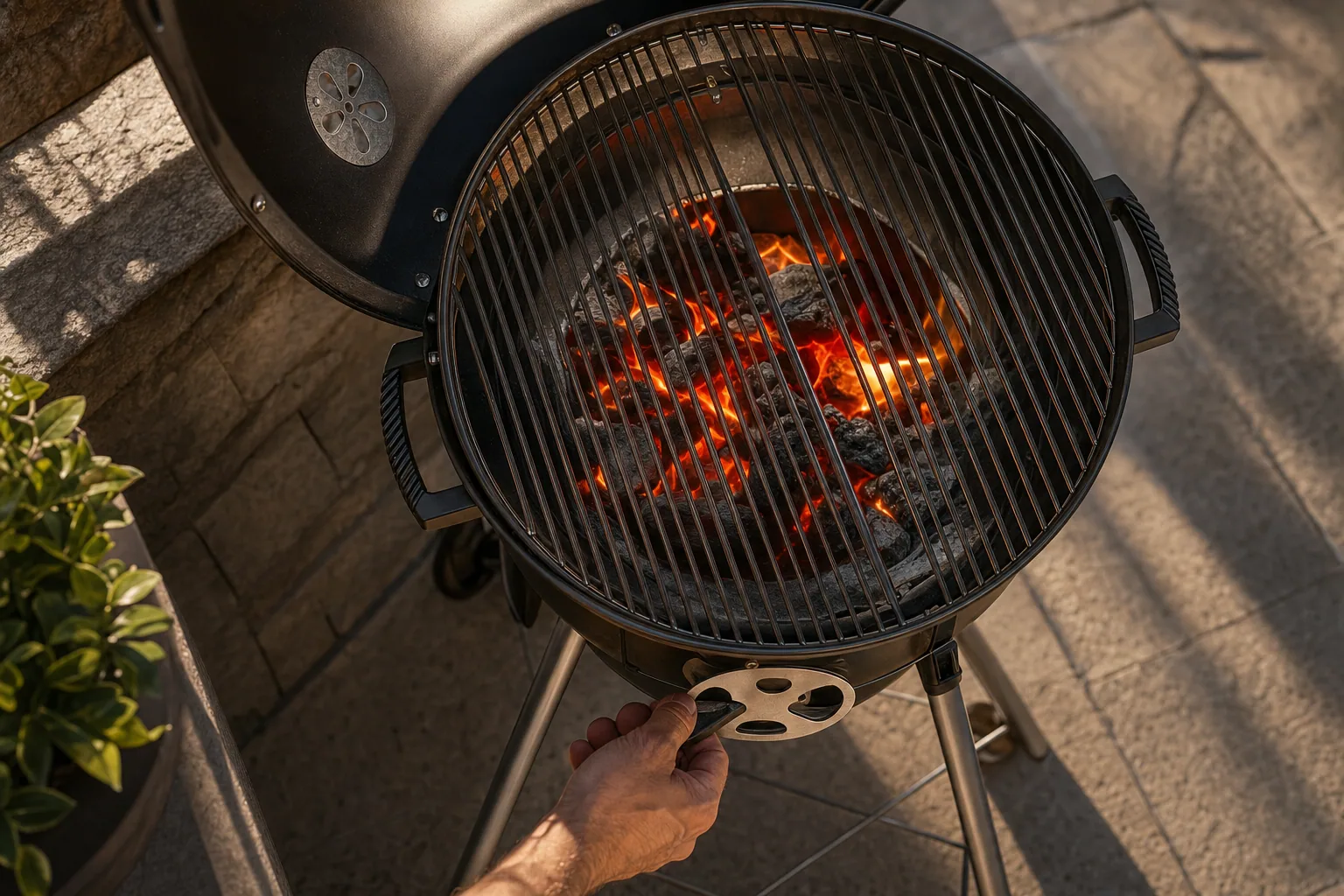
Why Temperature Control Matters on Charcoal Grills
Charcoal grilling is one of the most rewarding ways to cook outdoors, but it demands respect. Unlike gas grills where you turn a knob to adjust heat, charcoal requires active management. Mastering how to control temperature on charcoal grills transforms you from someone who gets lucky with results to someone who cooks with intention.
Proper temperature control means the difference between a perfectly seared steak and one that's charred outside and cold inside. It lets you maintain low, steady heat for smoking ribs for hours or blast high heat for quick searing. Whether you're new to charcoal or refining your technique, understanding the mechanics of heat management is essential.
The Role of Oxygen and Airflow
Charcoal burns hotter when it gets more oxygen. This is the foundation of charcoal grill temperature control. All charcoal grills, from ceramic kamado-style cookers to traditional kettle grills, rely on vents to regulate airflow and therefore heat.
Most charcoal grills have two sets of vents: intake vents at the base and exhaust vents at the top. Air enters through the bottom vents, flows across the coals, and exits through the top. By opening these vents wider, you increase oxygen flow, making the fire hotter. Closing them restricts oxygen, cooling the grill.
This relationship is direct and immediate. You can feel the effect within seconds of adjusting a vent. This makes charcoal grilling interactive. You're not just setting a temperature and walking away. You're actively communicating with the fire.
Charcoal Grill Temperature Control Through Vent Adjustment
The most practical tool for charcoal grill temperature control is vent management. Here's how to use it:
For High Heat (400-600+ degrees Fahrenheit)
- Open both bottom and top vents fully
- Allow maximum airflow across the coals
- Check your grill thermometer every 5-10 minutes until it stabilizes
- Make small adjustments if the temperature overshoots your target
For Medium Heat (300-400 degrees Fahrenheit)
- Open bottom vents about halfway
- Adjust top vents to about 75% open
- This balances oxygen flow with heat retention
- Fine-tune by making quarter-turn adjustments to either vent
For Low Heat (225-300 degrees Fahrenheit)
- Close bottom vents to about one-quarter open
- Keep top vents just cracked, about 25-50% open
- Monitor the temperature closely, as it's more sensitive to small vent changes
- Be patient. It may take 15-20 minutes to reach a stable low temperature
The key is patience and incremental adjustments. Don't make large vent changes and expect instant results. Small moves, wait five minutes, then assess.
Charcoal Placement and Fuel Management
Beyond vents, where you place your charcoal dramatically affects temperature distribution and control. Two-zone cooking is the gold standard for charcoal grilling:
- Hot zone: Pile charcoal on one side of the grill to create a high-heat area
- Cool zone: Leave the other side empty or with minimal coals for indirect cooking
This setup gives you flexibility. Sear steaks over the hot zone, then move them to the cool zone to finish cooking gently. Smoke a brisket over the cool zone while occasionally searing it over the hot side.
You can also adjust temperature by the amount of charcoal you use. More charcoal burns longer and hotter. Less charcoal produces gentler, cooler heat. Start with what you think you need, light it, and adjust vents from there. Over time, you'll develop intuition about how much charcoal to use for different cooking goals.
Essential Tools for Monitoring and Adjusting
Grilling by feel and guesswork leads to inconsistent results. Use tools to take the guesswork out:
- Grill thermometer: A dome thermometer tells you the air temperature inside the grill. Place it near where you'll cook to get an accurate read. Some premium charcoal grills come with built-in thermometers, while others require you to buy one separately.
- Meat thermometer: An instant-read meat thermometer ensures your food reaches the right internal temperature regardless of grill heat.
- Two-zone thermometer probe: If you set up two cooking zones, you can use two probe thermometers to monitor each zone independently.
- Timer: Simple but crucial. Most temperature problems stem from not giving the grill enough time to stabilize.
Ceramic Charcoal Grills and Digital Innovation
Traditional charcoal grilling relies on manual vent adjustment. But newer ceramic charcoal grills, like Kamado Joe cookers available at Prime Grill Shop, offer precision ceramic construction that holds temperature exceptionally well. The thick ceramic walls insulate heat, making temperature more stable once you dial in the vents.
Some modern charcoal models now include digital controls and automation. These take the guesswork out of vent management by automatically adjusting airflow to hit your target temperature. If you're interested in charcoal cooking but want the ease of temperature consistency, these innovations bridge the gap between traditional and convenient.
Developing Your Technique
Mastering charcoal grill temperature control is a skill that improves with practice. Keep notes on what you cook: how much charcoal you used, what vent positions you set, how long the grill took to stabilize, and how the food turned out. Over several cookouts, patterns emerge.
Start simple. Pick one cooking style, master it, then expand. Learn to hold steady low heat for smoking. Then practice high-heat searing. Each skill builds on the last.
Remember that conditions change. Wind affects airflow. Outdoor temperature matters. Rain and humidity influence how charcoal burns. Your charcoal source might change. Stay flexible and adjust accordingly.
Charcoal grilling rewards attention and intention. The interplay between vents, fuel, and fire creates a direct connection between you and the cooking process. That's part of why charcoal lovers are so passionate. You're not just cooking. You're actively controlling the heat, learning from every cook, and getting better every time you light the grill.
If you're ready to invest in a quality charcoal grill or want expert guidance on which model fits your cooking style, Prime Grill Shop offers carefully selected charcoal options with free shipping, full manufacturer warranties, and U.S.-based support to help you choose with confidence.