
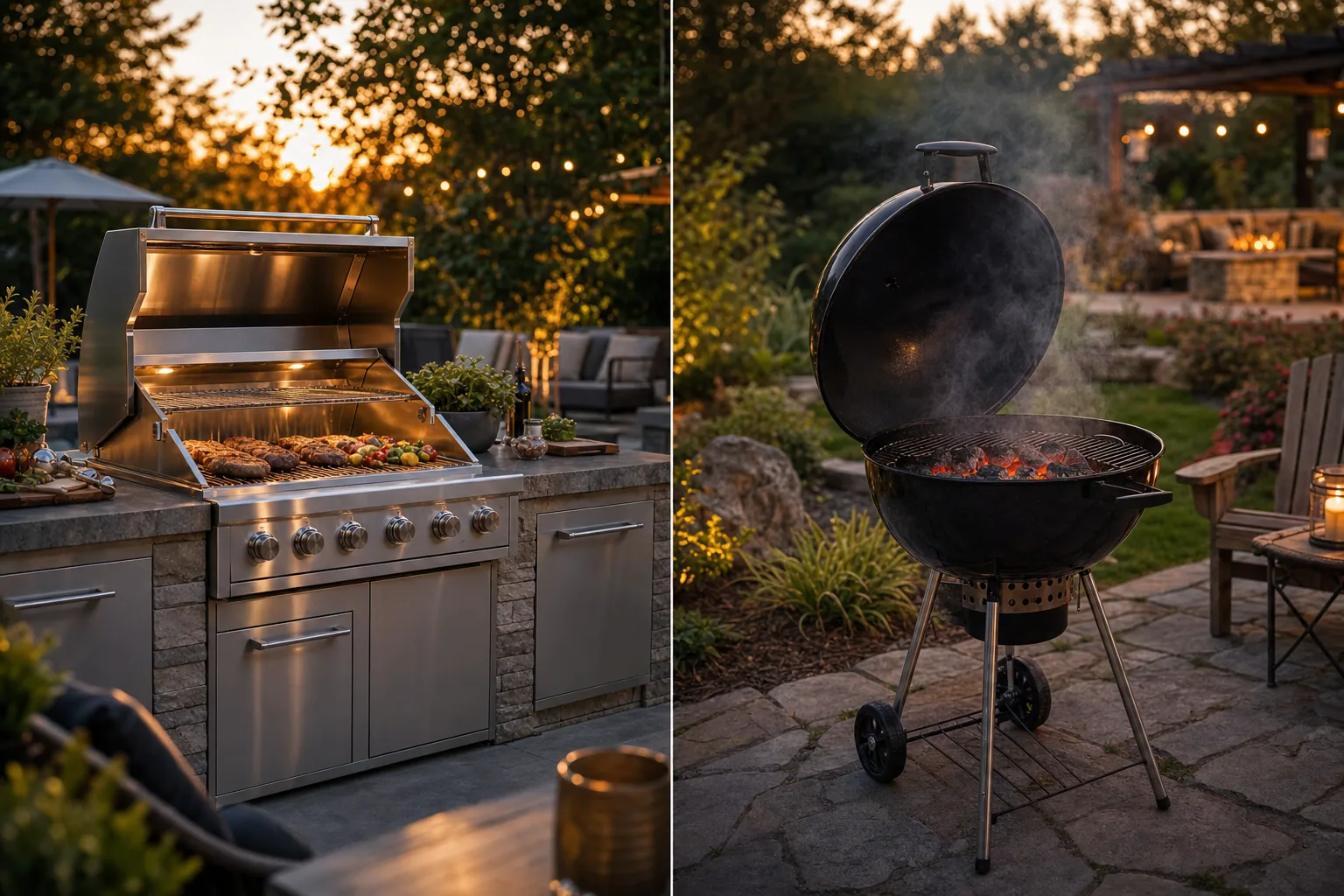
When you're ready to invest in a premium outdoor grill, the first major decision is often the fuel type: gas or charcoal. Both have loyal followings, and both can deliver exceptional backyard meals. But they're fundamentally different cooking experiences, each with its own advantages, drawbacks, and real costs. Understanding these differences helps you choose the grill that fits your lifestyle, entertaining style, and budget.
What Sets Gas and Charcoal Apart
The core difference is how heat is generated and controlled. Gas grills use natural gas or propane to create instant, adjustable heat from burners. Charcoal grills rely on burning charcoal briquettes or lump charcoal to create heat, which you manage by adjusting vents and charcoal placement.
This fundamental distinction ripples through every aspect of ownership: how quickly you cook, flavor intensity, maintenance demands, and ongoing costs. Neither is objectively "better," but one will likely align better with how you actually use your backyard.
Gas Grill Advantages
Gas grills are built for convenience and consistency. Here's why so many backyard chefs prefer them:
- Instant ignition: You turn a knob and cook. No waiting for coals to ash over.
- Precise temperature control: Adjust burners to hit specific heat levels for different foods.
- Faster cooking times: Hotter, more controllable heat means meals come together quicker.
- Less hands-on work: No charcoal management, less ash cleanup, minimal flare-ups once you learn your grill.
- Better for entertaining: Set the temperature and focus on your guests instead of tending the fire.
- Consistent results: The same settings produce similar outcomes meal after meal.
Gas grills also work well in various weather. Rain won't spoil your cookout the way wet charcoal can.
Charcoal Grill Advantages
Charcoal devotees aren't just nostalgic. Charcoal offers distinct cooking benefits:
- Superior flavor: The smoke from charcoal infuses food with a depth gas can't replicate. Many people describe it as richer, more authentic barbecue taste.
- Higher heat capacity: Charcoal reaches hotter temperatures than most gas grills, excellent for searing steaks or achieving crispy skin on chicken.
- Flexibility: You can create hot and cool zones by piling charcoal on one side, enabling indirect cooking for larger items.
- Lower entry price: Quality charcoal grills typically cost less upfront than comparable gas models.
- Simplicity: Fewer components mean fewer things to break or maintain.
- Portable options: Smaller charcoal grills are easier to move around your backyard or take to events.
Cost Comparison
Total cost of ownership involves more than the initial purchase.
Upfront Purchase: Charcoal grills generally cost less to buy. A solid entry-level charcoal grill runs $300 to $1,000, while gas grills start around $600 to $1,500 for quality models. Premium options from brands like Napoleon or Summerset can exceed $2,000 to $6,000 in either category.
Fuel and Supplies: This is where the math gets interesting. A bag of charcoal (20 to 40 pounds) costs $15 to $30 and lasts roughly 10 to 15 uses. That's about $1 to $3 per cookout.
Propane or natural gas is cheaper per use. A 20-pound propane tank costs $15 to $30 to fill and fuels dozens of cookouts, bringing fuel cost to $0.50 per use or less. Natural gas, if you have a line run to your grill, costs pennies per cookout.
Maintenance: Gas grills need annual inspections, occasional regulator replacement, and burner cleaning. Charcoal grills need less frequent servicing but produce ash and require more cleaning after each use.
Warranty and Support: Both types are typically covered by manufacturer warranties. Prime Grill Shop backs every grill with full manufacturer warranty and U.S.-based customer support, taking the guesswork out of repairs.
Time, Skill, and Lifestyle
Beyond specifications, consider your actual routine. How much time do you have before cooking? How patient are you? How often do you grill?
If you're the type who fires up the grill on a weeknight after work, gas is practical. You'll have dinner ready in 30 minutes. If you're hosting weekend gatherings where cooking is part of the entertainment, charcoal's lower barrier to entry and superior flavor might outweigh the setup time.
Charcoal requires learning curves: chimney starters, vent management, understanding when coals are ready. Gas is more forgiving for beginners. That said, plenty of charcoal enthusiasts find this engagement with fire and temperature management part of the joy.
The Best Grill Type for You
Choose gas if:
- You cook frequently and value convenience.
- You want precise temperature control.
- You entertain often and want to minimize stress.
- You live somewhere wet or windy.
- Fuel cost per use matters to your budget.
Choose charcoal if:
- Authentic, smoky flavor is non-negotiable.
- You have space and patience for setup.
- You cook less frequently and can amortize fuel costs.
- You love the ritual of grilling.
- Higher searing temperatures appeal to you.
Making Your Decision
The right choice depends on your backyard goals, available time, and what you value in outdoor cooking. Both gas and charcoal can be the foundation of unforgettable meals with family and friends. The investment in quality equipment pays dividends in reliability, performance, and those shared moments that backyard entertaining is really about.
When you're ready to choose, Prime Grill Shop carries premium gas grills and charcoal models from trusted brands like Napoleon, Summerset, and Memphis Grills. We offer free shipping on all orders, hassle-free returns, and U.S.-based support to help you make the right call for your backyard. Explore our selection and invest in the grill that matches your cooking style.