
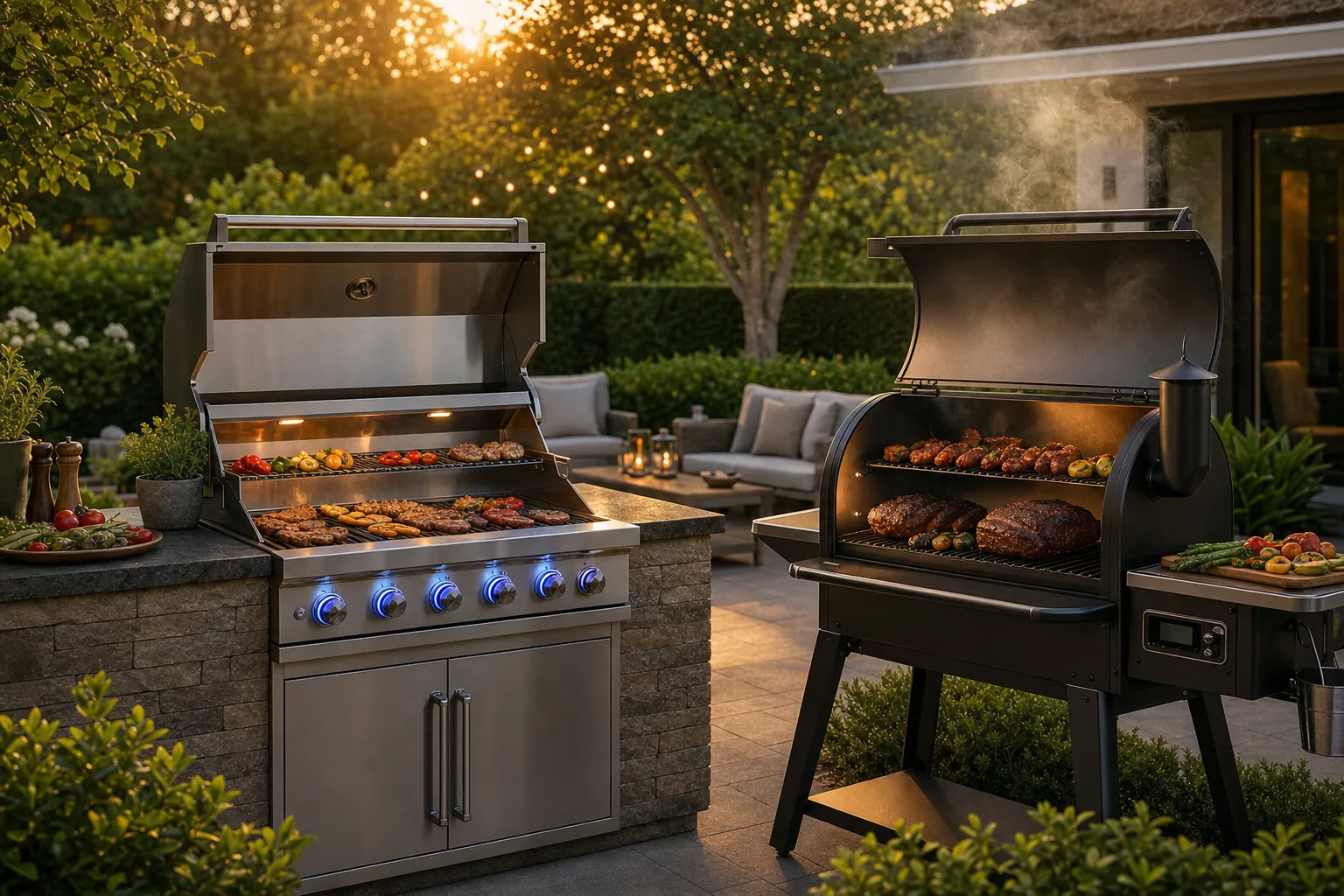
When it comes to outdoor cooking, the choice between gas and pellet grills often comes down to your lifestyle, cooking preferences, and what matters most to you in the backyard. Both options deliver excellent results, but they work in very different ways. Understanding the key differences will help you make a decision that fits your family's entertaining style and your cooking goals.
What Sets Gas and Pellet Grills Apart
Gas grills have been the backyard favorite for decades. They use propane or natural gas to fuel direct heat, giving you instant flames and straightforward temperature control. You turn a knob, ignite the burners, and you're cooking in minutes.
Pellet grills, by contrast, use hardwood pellets as fuel and operate more like an oven with a smoker. An electric auger feeds pellets into a firebox, where an igniter creates heat and smoke. A temperature controller maintains your desired heat level, making pellet grills excellent for smoking, low-and-slow cooking, and maintaining consistent temperatures.
Both styles deliver delicious food. The real question is which workflow and cooking style fit your needs better.
Ease of Use and Setup
Gas grills are incredibly straightforward. There's minimal setup required: connect your propane tank or natural gas line, verify all connections are secure, and you're ready to cook. Temperature control is instant and intuitive. If you want 400 degrees, you adjust the burners and reach that temperature in a few minutes.
Pellet grills require a bit more attention to detail, especially at first. You'll need to fill the hopper with pellets, check your controller settings, and allow time for the grill to reach temperature. However, once you're familiar with your specific model, operation becomes routine. Many modern pellet grills include WiFi controls and digital displays that make temperature management nearly effortless.
If you value simplicity and want to fire up your grill for a quick weeknight dinner, gas wins on convenience. If you don't mind a slightly longer prep process in exchange for hands-off cooking during extended sessions, a pellet grill delivers outstanding results.
Cooking Speed and Flexibility
Gas grills excel at high-heat cooking. You get immediate flames, rapid temperature response, and the ability to sear steaks, burgers, and chops with a beautiful crust in minutes. You also have precise zone control, letting you create hot and cool areas on the same cooking surface.
Pellet grills shine at low-and-slow cooking. They maintain steady temperatures for hours, making them ideal for smoking brisket, ribs, pulled pork, and chicken. The indirect heat and smoke flavor are difficult to replicate on a gas grill. Many people find pellet grills more versatile overall because they handle everything from smoking to roasting to grilling, though at lower temperatures they cook a bit more slowly than gas.
Consider your typical meals: quick weeknight grilling suggests gas, while weekend entertaining with smoked meats points toward pellets.
Flavor Profile and Smoke
This is where the two grills diverge most noticeably. Gas grills produce heat but minimal smoke. You get excellent char and caramelization, but the subtle smoky flavor that defines barbecue comes entirely from added wood chips or a smoker box.
Pellet grills deliver authentic wood smoke as a core feature. The burning pellets create that classic barbecue taste that many home cooks chase. If you love the deep, smoky flavor of traditional barbecue, a pellet grill is worth serious consideration.
That said, gas grills remain incredibly popular for good reason. They're perfect for grilled vegetables, seafood, steaks, and everyday family meals. The lack of smoke flavor isn't a drawback if you're not specifically seeking it.
Maintenance and Operating Costs
Gas grills are low-maintenance. You clean the grates after each use, empty grease traps occasionally, and replace propane or arrange natural gas delivery when needed. Operating costs are straightforward: fuel prices vary, but gas remains affordable and widely available.
Pellet grills require a bit more upkeep. You'll need to clean ash from the firebox regularly, check and clean the heat diffuser, and occasionally vacuum the hopper. The electric components add a small vulnerability compared to a purely mechanical gas grill. Pellet fuel costs are comparable to gas in many regions, and you'll use roughly one full hopper (roughly 20 pounds of pellets) per long cooking session.
Neither option is expensive to run, but gas edges out pellets slightly for true set-it-and-forget-it simplicity.
Best Pellet Grill for Beginners
If you're new to pellet grilling, start with a mid-range model from a trusted brand. Look for a grill with a digital controller that manages temperature automatically, a reliable auger system, and good insulation. Mid-size pellet grills (around 25 to 30 inches of cooking surface) are easier to manage than large models and still accommodate most home cooking needs.
Prime Grill Shop carries premium brands like Memphis Grills, Summerset, and Napoleon, all known for reliable construction and excellent customer support. Starting with quality equipment from an authorized dealer means full manufacturer warranties and U.S.-based support if you have questions.
Which Grill Is Right for You?
Choose a gas grill if you:
- Cook frequently on weeknights and want speed
- Prefer simple operation and minimal fuss
- Enjoy searing and high-heat cooking
- Prefer instant flame control
- Want the lowest maintenance overhead
Choose a pellet grill if you:
- Love smoked meats and barbecue flavor
- Enjoy low-and-slow cooking sessions
- Want a versatile grill that handles smoking, roasting, and grilling
- Are willing to trade a few extra minutes of setup for superior flavor
- Like the idea of a temperature controller managing heat for hours
Both gas and pellet grills deliver memorable outdoor cooking experiences. The best grill for your backyard is the one you'll use most often and enjoy most. If you're torn, consider your typical entertaining style: quick weeknight family dinners lean gas, while weekend gatherings focused on smoking and sharing point toward pellets.
At Prime Grill Shop, we carry both types from premium brands, with free shipping on all orders and U.S.-based support to help you choose. Whether you go gas or pellets, you're investing in unforgettable backyard experiences with family and friends.