
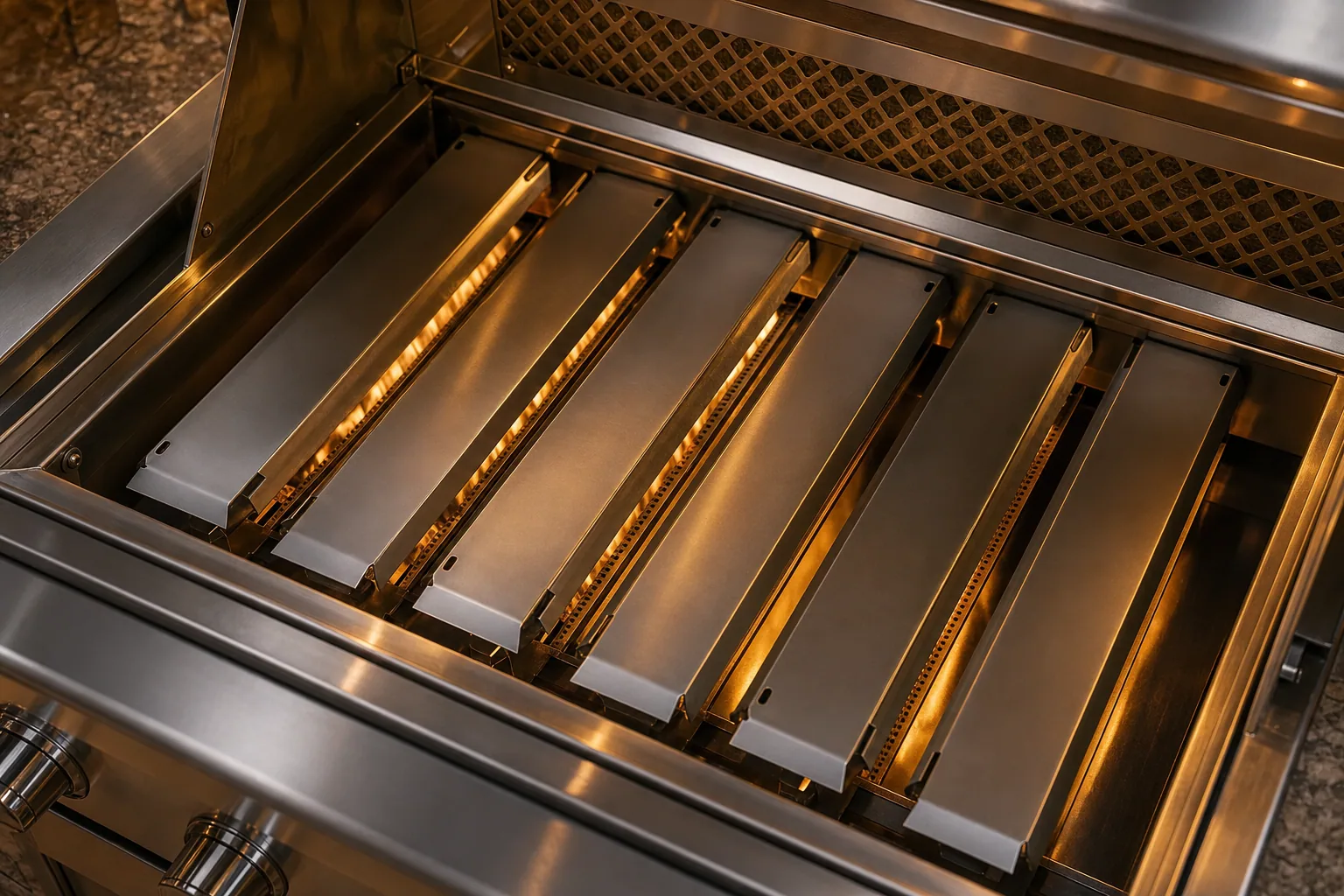
A heat deflector for grill is one of the most effective upgrades you can make to improve your cooking performance. Whether you're working with a built-in model or a freestanding cart grill, understanding how deflector plates work and why they matter will help you cook more consistently and enjoy better results across the board.
What Are Grill Deflector Plates?
Grill deflector plates are metal barriers that sit between your burners and cooking grates. They intercept direct flames and heat, spreading warmth more evenly across the cooking surface. Instead of hot spots and cold zones, deflectors create a gentler, more uniform temperature environment.
These plates are typically made from stainless steel or ceramic, materials chosen for their durability and heat resistance. They're a standard feature on most premium grills, and for good reason: they're simple, effective, and make a real difference in how your food cooks.
Why Heat Distribution Matters
Uneven heat is the enemy of consistent grilling. Without proper heat distribution, you end up with:
- Flare-ups caused by dripping fats hitting direct flame
- Hot spots that char food unevenly
- Cold zones where meat cooks slowly or incompletely
- Difficulty maintaining steady temperatures during long cooks
A quality heat deflector for grill solves these problems by creating indirect heat zones. This is especially valuable when you're cooking delicate items like fish or vegetables, or when you want to move food away from direct flames to prevent burning.
How Grill Deflector Plates Work
The mechanics are straightforward but powerful. When heat rises from your burners, the deflector plates catch it and redirect it upward and outward. This gentle spreading effect transforms direct radiant heat into something closer to convection heat, similar to what you'd experience in an oven.
This redirection also helps manage flare-ups. Grease and juices that would otherwise drip onto flames and cause sudden heat surges instead land on the deflector plates, where they vaporize and add flavor without creating dangerous spikes in temperature.
The Impact on Cooking Styles
Different cooking methods benefit from good heat distribution in different ways:
- Direct grilling: Even heat means consistent searing and browning without charring.
- Indirect cooking: Deflectors create the gentle, surrounding heat needed for low-and-slow smoking or roasting.
- Searing: With heat spread evenly, you get reliable, professional-quality crusts on steaks and chops.
- Large format cooking: When you're grilling multiple items at once, uniform temperature prevents some pieces from cooking faster than others.
Many premium grill owners appreciate having the flexibility to use both direct and indirect methods on the same grill. Deflector plates make this easier by giving you better control over where the intense heat concentrates.
Choosing the Right Deflector Plates
When shopping for deflector plates, match them to your specific grill model. Most premium brands like Napoleon, Summerset, and TrueFlame offer grill liners and deflectors designed for their particular burner configurations and cooking box dimensions.
Key factors to consider:
- Material quality: Stainless steel resists rust and warping better than coated alternatives.
- Fit and finish: Deflectors should sit securely without gaps that allow flame to escape the intended path.
- Ease of cleaning: Some designs make it simpler to remove ash and grease buildup.
- Durability: Thicker materials hold up longer to repeated heating and cooling cycles.
If you're not sure which deflector plates work with your grill, check your owner's manual or reach out to an authorized dealer. Prime Grill Shop can help you identify the exact fit for your model and ensure you get the right product the first time.
Maintenance and Care
Deflector plates require minimal upkeep, but basic care keeps them working well. After each cooking session, allow the grill to cool slightly, then brush away ash and debris. For deeper cleaning, remove the plates (if your design allows) and wash them with warm soapy water.
Over time, the underside of deflectors may accumulate grease residue. This is normal and doesn't harm performance, but you can clean it away with a grill brush during your regular maintenance routine. Avoid abrasive scrubbers that might damage the finish on stainless steel plates.
Proper maintenance also means replacing deflectors if they become warped or severely corroded. A damaged deflector won't redirect heat as intended, so replacing it restores your grill's performance.
Pairing Deflectors with Other Accessories
Grill deflector plates work best as part of a complete care routine. Consider complementing them with other essential accessories like grill covers to protect your investment when it's not in use, and quality cleaning tools to maintain both the deflectors and the rest of your cooking surface.
Many grill owners also invest in companion items like side burners or rotisserie kits, which often have their own heat management components. Premium grills from brands like Napoleon and Summerset are designed so all these pieces work together seamlessly.
Invest in Better Grilling
A heat deflector for grill may seem like a small detail, but it's one of the factors that separates a frustrating, inconsistent cooking experience from one where you feel in control. Better heat distribution means more even browning, fewer flare-ups, and the confidence that your food will cook the way you intend.
If you're planning an outdoor kitchen or upgrading your current setup, deflector plates deserve a spot in your equipment checklist. Talk to the team at Prime Grill Shop about which deflectors work best with your specific grill model, and discover how this simple upgrade can transform your backyard cooking.