
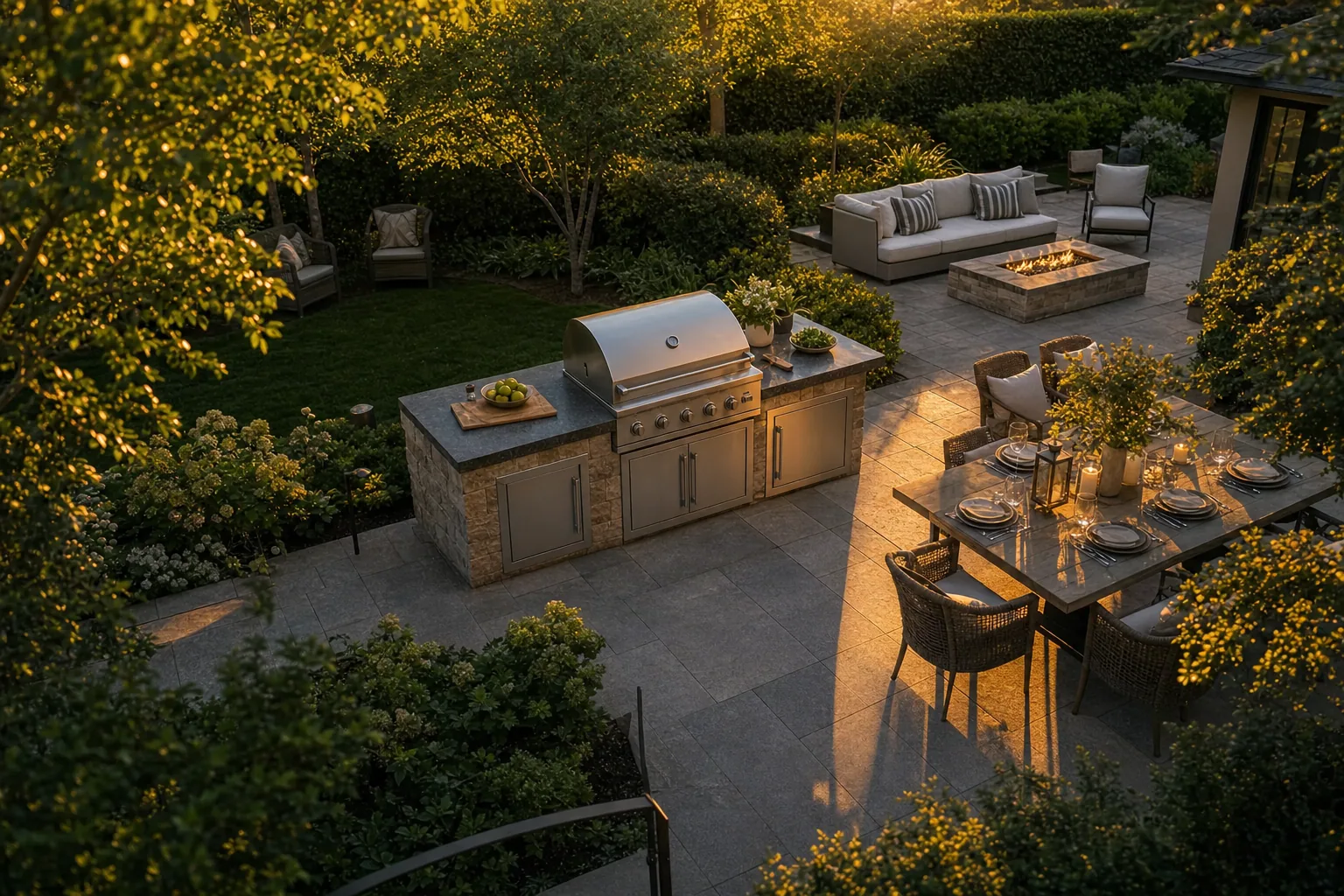
When you invest in a premium grill from Prime Grill Shop, you're investing in unforgettable experiences with family and friends. But even the finest equipment delivers less impact if it's placed in the wrong spot on your patio or deck. Where to put grill on patio matters more than many homeowners realize. The right placement transforms your backyard into a natural gathering space, while poor positioning can leave you isolated, battling wind and smoke, or fumbling in tight quarters when cooking for a crowd.
This guide walks you through the key factors that determine successful grill placement and deck setup, so your outdoor cooking area becomes the heart of your entertaining.
Consider the Flow of Your Entertaining Space
The best grill placement creates an easy flow between cooking and socializing. Your guests shouldn't have to navigate around you, and you shouldn't feel cut off from conversation while you're tending to the grill.
Think of your entertaining zone as three overlapping circles: the cooking area, the dining area, and the lounge area. Your grill should sit at the edge of the cooking zone, with enough space behind it for you to work comfortably. Ideally, your dining table sits just beyond comfortable talking distance from the grill, and your lounge seating anchors the space further back.
This layout keeps you engaged with your guests while you cook. You can chat, tend the grill, and stay aware of what's happening around you. Nobody feels crowded, and the grill becomes a natural focal point rather than an obstacle.
Account for Wind Patterns and Sun Exposure
Wind affects both cooking performance and comfort. If your backyard sits in a wind tunnel, your grill's heat will dissipate unevenly, making temperature control harder. Smoke also drifts toward your guests if the prevailing breeze moves in their direction.
Observe your yard at different times of day and in different seasons. Early morning light might reveal wind patterns you hadn't noticed. Trees, structures, and terrain all influence air movement. If possible, position your grill where natural windbreaks (shrubs, fences, or landscape features) soften strong gusts without completely blocking air circulation.
Sun exposure matters too. All-day sun can make grilling uncomfortable in peak summer heat. A grill positioned under dappled shade from a large tree gives you relief while still allowing air circulation. That said, you want enough light to see your food and controls clearly. The sweet spot is afternoon shade with good visibility.
Provide Adequate Space Around Your Grill
Your grill needs breathing room. National fire codes generally recommend keeping grills at least 10 feet away from combustible structures like your house, deck railing, or wooden privacy fences. Check your local codes, as some jurisdictions require more distance.
Beyond safety, space around your grill improves the cooking experience. You need room to move side to side, room to open cabinet doors if your grill has them, and space to rest platters and tools. A cramped grill area makes entertaining stressful.
Aim for at least 3 to 4 feet of clear space on the sides and front of your grill, and more if your deck or patio layout allows. If you're running a full-service outdoor kitchen with griddles, pizza ovens, and refrigeration near your grill, ensure each piece of equipment has its own dedicated zone with clear traffic paths between them.
Position for Easy Access to Utilities
If your grill runs on natural gas, you'll need a supply line from your home or a dedicated line installed. Propane grills need clear access to the tank, which you may need to swap out occasionally. Positioning your grill near utility connections saves installation costs and simplifies maintenance.
Electric elements like lighting or a side burner also benefit from proximity to outdoor outlets. Think about where water sources are too. If you're planning to add outdoor refrigeration or a beverage station, having easy access to water and drainage simplifies setup.
Create a Clear View from Your Kitchen
If your kitchen has a window or door overlooking your entertaining area, position your grill within sight. This matters especially if you're juggling cooking indoors and outdoors, or supervising kids while grilling. You can grab ingredients from inside, keep an eye on food, and stay connected to what's happening in your outdoor space without constantly walking back and forth.
A grill visible from your kitchen also becomes a design feature that extends your home's visual appeal into the yard. Premium grills from brands like Napoleon and Summerset are attractive enough to serve as landscape focal points.
Think About Shade and Weather Protection
While some shade is ideal, consider whether you want to add a permanent structure over your grill area. A pergola or shade sail can reduce sun exposure without trapping heat or smoke. Some homeowners install permanent covers or built-in grill enclosures for weather protection, but these require proper ventilation to avoid heat and smoke buildup.
If you choose a freestanding grill, a portable cover or wheeled cart with a canopy offers flexibility. You can shade your grill on hot days and pull it out fully when you need maximum sun and airflow.
Plan for Entertaining Comfort
Your guests' comfort shapes grill placement as much as your own. Smoke drifting into the lounge seating area becomes annoying fast. Position seating upwind of your grill, or at least offset from the main smoke plume. If your yard is small, angle the grill slightly so smoke drifts away from gathering areas.
Also consider noise. Some premium grills run quietly, but if you add electric accessories or live near a busy street, position your entertaining zone away from the loudest elements.
Lighting matters too. As entertaining often stretches into evening, ensure your grill area is well-lit. Most quality grills include built-in lights, but adding overhead string lights or deck fixtures creates ambiance and ensures you can see what you're cooking.
Start with a Layout Plan
Before you finalize grill placement, sketch out your entertaining space on paper or use a simple digital tool. Mark your grill's footprint, note traffic paths, and identify seating zones. Walk through the layout in your mind. Can you move from kitchen to grill to dining table smoothly? Do guests naturally gather in comfortable spots?
If you're unsure about layout or grill type, Prime Grill Shop's U.S.-based customer support team can offer guidance based on your yard's dimensions and your entertaining style. Whether you're choosing between a freestanding grill, a built-in option, or something that fits a broader outdoor kitchen setup, getting placement right from the start pays dividends for years.
Great grill placement transforms your backyard into the gathering place your family and friends will love. Take time to observe your yard, consider your entertaining patterns, and position your grill where it fosters connection and comfort. With the right setup, every meal becomes an opportunity to create memories.