
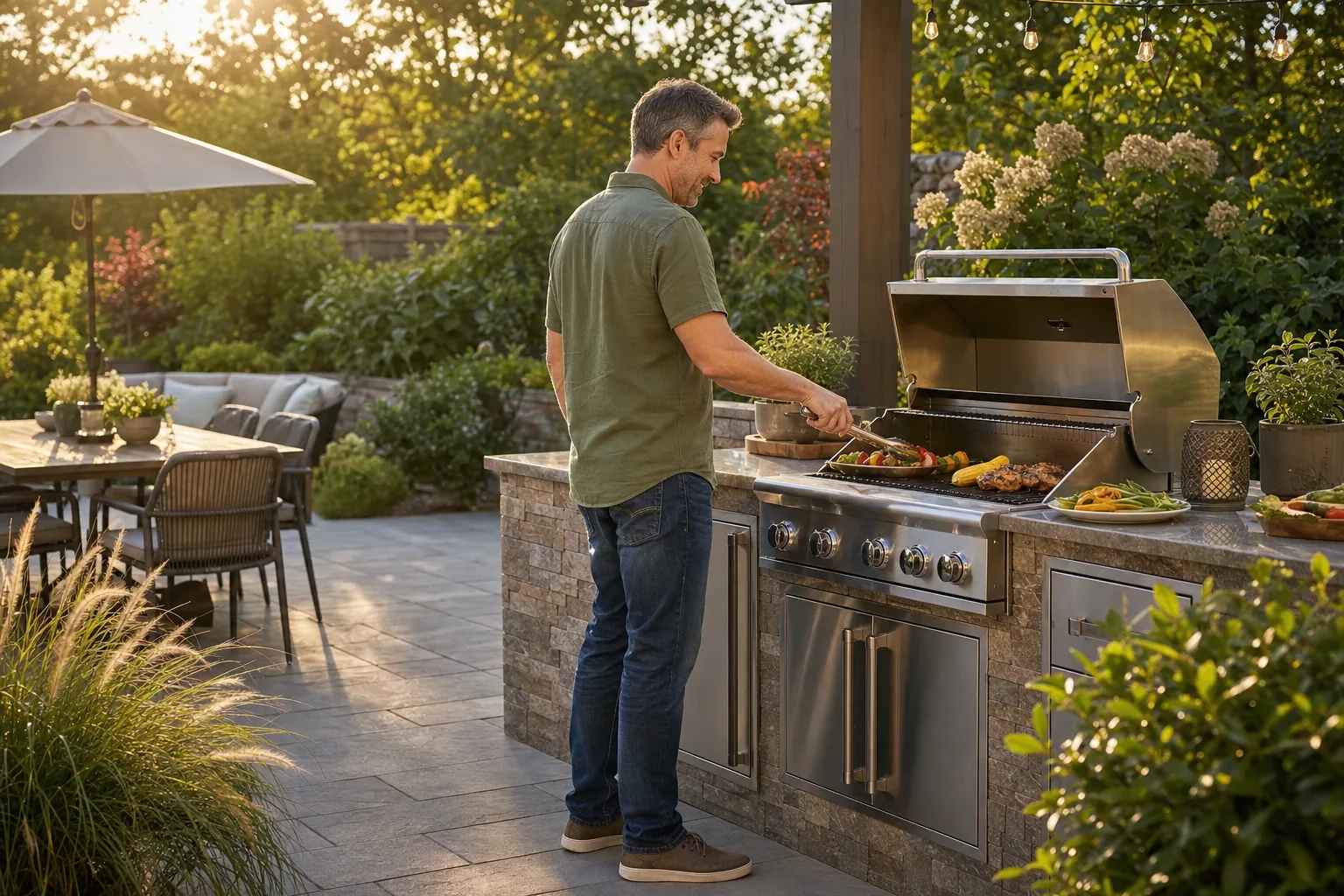
Grilling is one of the best ways to cook for family and friends, but like any cooking method, it requires respect and attention to detail. Whether you're firing up a freestanding grill or investing in a built-in outdoor kitchen setup, understanding grill safety tips is essential to protect yourself, your loved ones, and your home. This guide covers the fundamentals of safe grilling practices so you can enjoy your outdoor cooking with confidence.
Start With Proper Grill Placement
Where you put your grill matters more than many beginners realize. Always place your grill on a flat, stable surface away from structures, trees, and overhanging branches. Keep the grill at least 10 feet from your house, deck railings, and other combustible materials. Wind can push heat and embers toward nearby structures, so positioning matters year-round.
If you're planning to install a built-in grill as part of a larger outdoor kitchen, this is where professional guidance becomes valuable. Proper clearances and ventilation are critical, and an experienced retailer can walk you through placement requirements specific to your grill model and yard setup.
Make sure the ground is level and can support the grill's weight. Uneven surfaces can cause the grill to tip, which is a serious fire hazard. If you're using a cart-style grill, check that the wheels lock securely in place before cooking.
Inspect and Maintain Your Grill Regularly
Regular maintenance is one of the most overlooked aspects of grill fire safety. Before each grilling season, inspect your grill thoroughly for damage, rust, and leaks. Check the gas connections for cracks or loose fittings. A soapy water solution applied to connections will reveal leaks as bubbles. If you find a leak, do not use the grill until it's repaired.
Clean the grill grates and interior after every few uses to prevent grease buildup. Grease is highly flammable and can cause dangerous flare-ups if it ignites inside the grill. Remove debris from the grill box and around the burners. Built-in grills benefit from periodic professional cleaning to maintain safe operation.
Keep the grill's exterior clean and free of rust. Stainless steel grills resist corrosion better than other materials, but all grills need protection from the elements. Cover your grill when it's not in use, and store propane tanks outside and away from heat sources during the off-season.
Master Gas and Fuel Handling
Proper fuel management is critical for fire safety. If your grill uses propane, always check the tank level before you start cooking. Never leave a propane tank in direct sunlight or hot environments, as pressure inside the tank can increase dangerously. Store tanks upright and outside, away from your house.
When you light your grill, open the lid first to let any accumulated gas escape. This prevents dangerous pressure buildup. Then, turn on the gas and ignite the burners. If the burners don't light immediately, turn off the gas, wait a minute, and try again. Never assume the grill is broken if it doesn't light right away; rushing this step can create hazardous conditions.
For charcoal grills, use only charcoal designed for grilling. Never use lighter fluid indoors or in enclosed spaces. Let charcoal cool completely before disposing of it, and never dump hot charcoal into trash cans or near combustible materials.
Keep a Safe Cooking Zone
Establish a safety perimeter around your grill while cooking. Keep children and pets at least 3 feet away from the grill at all times. Heat radiates from the grill in all directions, and curious hands or paws can get seriously burned.
Always wear long sleeves and pants when grilling, and tie back long hair. Never wear loose, dangling clothing that can catch fire. Use long-handled tongs and spatulas to maintain distance from heat and flames. Keep a fire extinguisher rated for grease fires within 10 feet of your grill, and know how to use it before an emergency happens.
Never leave your grill unattended while it's in use. Even a few minutes away can allow a problem to develop unchecked. If you need to step away, turn off the grill and close the lid to extinguish the flames.
Prevent and Respond to Flare-ups
Flare-ups happen when fat from meat drips onto hot grates and ignites. They're scary but manageable if you're prepared. To prevent excessive flare-ups, trim excess fat from meat before cooking. Move food to cooler zones of the grill if flames get too high.
If a flare-up occurs, do not panic. Keep the grill lid open and move food away from the flames using tongs. Most flare-ups burn out quickly once you remove the fuel source. If the fire spreads beyond the grill or doesn't die down within a few seconds, turn off the gas, close the lid to smother the flames, and let it cool. Only use your fire extinguisher if the fire is spreading outside the grill.
Know Your Grill Model and Features
Every grill is different, so read the manufacturer's manual for your specific model. Understand where the controls are, how the burners work, and what safety features are built in. If you're using a premium grill from brands like Napoleon, Summerset, or Memphis Grills, those models often include helpful features like temperature gauges and hood vents designed with safety in mind.
If you bought your grill from Prime Grill Shop, you have access to U.S.-based customer support and full manufacturer warranties. Don't hesitate to call with questions about your specific grill's safe operation. Having expert guidance during those first few cooking sessions can build your confidence and help you avoid rookie mistakes.
Be Prepared for Emergencies
Safety also means being ready if something goes wrong. Keep a Class B fire extinguisher rated for grease fires within reach of your grill. Do not use water on a grease fire; it will spread the flames. Never try to move a grill that's actively burning.
If a fire spreads beyond your control, evacuate the area and call 911. No grill is worth risking personal injury. Once everyone is safe, the fire department can handle the rest.
Grill safety is not complicated, but it does require attention and respect. By following these proven safe grilling practices, you'll protect yourself and your guests while you focus on the real reason you're grilling: creating memorable moments around good food and great company. Whether you're just starting out with a new grill or refining your technique, safety is the foundation of every great outdoor cooking experience.