
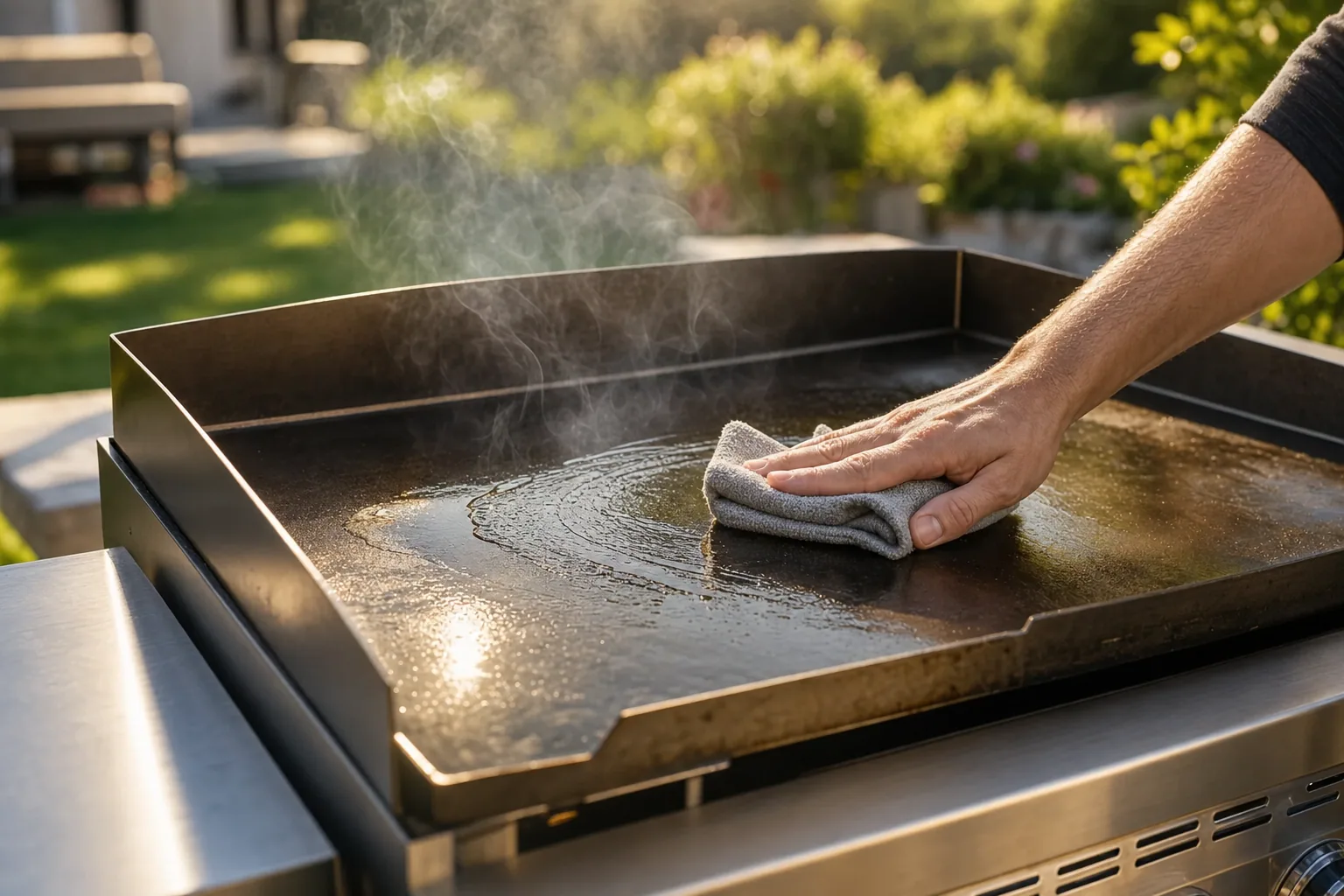
You just unboxed a brand-new outdoor griddle. Before you cook a single egg or smash a single burger, there is one step that will define how well that surface performs for years to come: seasoning. Done right, seasoning creates a natural non-stick coating, protects the steel from rust, and builds the deep, savory character that makes flat-top cooking so rewarding.
This guide walks you through exactly how to season a griddle from scratch, whether you bought a freestanding unit or a built-in flat top for your outdoor kitchen.
Why Seasoning Matters on a Flat Top
Unlike a traditional grill grate, a flat-top griddle is made from raw carbon steel or cold-rolled steel. That bare metal is porous at a microscopic level. When you apply a thin layer of oil and heat it past its smoke point, the oil bonds to the metal through a process called polymerization. The result is a hard, slick layer that fills those pores.
Skip this step and your griddle will stick, discolor unevenly, and start to rust faster than it should. Season it well and you get a surface that releases food cleanly, cleans up quickly, and actually improves with every cook.
What You Need Before You Start
Gather everything before you fire up the burners. You do not want to be digging through cabinets with hot oil on the surface.
- Cooking oil with a high smoke point. Flaxseed, avocado, grapeseed, or plain vegetable shortening all work well. Avoid olive oil for initial seasoning because its smoke point is too low.
- Paper towels or lint-free cloths. You will use these to spread oil in thin, even coats.
- Heat-resistant gloves. The surface gets very hot, very fast.
- A griddle scraper or spatula. Useful for spreading and for the cleaning pass before you begin.
- Warm soapy water and a cloth. For the one-time factory wash before the first season.
If you want quality tools designed specifically for flat-top cooking, Prime Grill Shop carries griddle accessories that make setup and seasoning much easier.
Step-by-Step: How to Season a Flat Top Grill
Follow these steps in order. Rushing any of them will leave you with uneven coverage and patchy seasoning.
Step 1: Wash Off the Factory Coating
New griddles often arrive with a light protective coating from the manufacturer. Use warm soapy water and a cloth to wipe the entire surface, then rinse it clean. This is the only time you will use soap on your griddle. Dry it completely with paper towels, then turn on the burners at medium heat for five minutes to drive off any remaining moisture.
Step 2: Apply the First Layer of Oil
Drop a small amount of oil onto the surface, roughly a tablespoon for every square foot of cooking area. Using a folded paper towel held with tongs, spread the oil across the entire surface in a very thin, even layer. You want the thinnest coat you can manage. A heavy puddle of oil will gum up instead of polymerize.
Step 3: Heat Until the Surface Smokes
Turn all burners to high and let the griddle heat until the oil stops smoking and the surface darkens. This typically takes 10 to 15 minutes. You are watching for the surface to go from a shiny wet look to a dull, darker color. That color change tells you the oil has bonded to the steel.
Step 4: Repeat the Process
This is where most people stop too early. Turn the heat down to medium, let the surface cool slightly, and apply another thin coat of oil. Heat it again until it stops smoking. Repeat this cycle at least three to five times. Each layer adds depth, durability, and that characteristic dark patina that signals a well-seasoned flat top.
Step 5: Let It Cool Completely
Once you have finished your last coat, turn off the burners and let the griddle cool down on its own. Do not rush cooling with water or cold air. When the surface is fully cool, apply one final whisper-thin layer of oil and leave it. That film protects the seasoning between uses.
Seasoning an Outdoor Griddle: Common Mistakes to Avoid
Even experienced cooks get this wrong the first time. Watch out for these pitfalls:
- Too much oil at once. Thick coats pool and bake into a sticky, uneven layer rather than a smooth polymer bond. Thin layers every time.
- Not heating long enough. If you pull the heat before the oil fully polymerizes, the seasoning will be soft and will flake off during your first real cook.
- Using a low smoke point oil. Butter and olive oil burn before they can bond properly. Save those for cooking, not seasoning.
- Skipping the repeat layers. One coat is not enough for a durable, non-stick surface. Three coats is a minimum; five is better.
- Cooking acidic foods first. Tomatoes, citrus, and vinegar-heavy sauces can strip a fresh season. Hold off on those for the first few cooks.
How to Maintain Your Seasoning Over Time
Seasoning is not a one-and-done job. It builds and deepens every time you cook, as long as you care for the surface properly after each session.
While the griddle is still warm after cooking, scrape any food debris toward the grease trap using your scraper. Add a splash of water if needed to lift stuck bits. Wipe the surface with a paper towel, apply a thin layer of oil, and you are done. That five-minute routine keeps rust away and adds to your seasoning layer by layer.
If you ever see rust spots or the surface looks dull and patchy, do a light re-season using the same process above. Griddle surfaces are forgiving and respond well to a refresh.
For anyone still deciding on which flat top to bring home, Prime Grill Shop's outdoor griddles collection includes options from trusted brands built for serious backyard cooks.
Ready to Cook on a Seasoned Flat Top
A properly seasoned griddle changes how you cook outside. Food releases cleanly, cleanup is faster, and the surface only gets better with time. The process takes patience on day one, but the payoff shows up in every meal after that.
Prime Grill Shop is built around the belief that your backyard is a stage for real connection, and having the right equipment is how you set that stage. If you have questions about which griddle fits your space or how to get started, the team is one call away at (970) 681-9122, with free shipping and full manufacturer warranties on every order.
FAQ
How many times should I season a new griddle before cooking on it?
Plan for at least three to five rounds of oil and heat before your first real cook. More layers mean a more durable, non-stick surface.
What is the best oil for seasoning a flat top grill?
High smoke point oils work best. Flaxseed, avocado, grapeseed, and vegetable shortening are all solid choices. Avoid olive oil for seasoning because it burns before it can bond properly.
Can I season my outdoor griddle if it already has rust spots?
Yes. Use a scraper or fine steel wool to remove the rust, wash and dry the surface, then run through the full seasoning process again. The steel will recover well.
Do I need to re-season my griddle after every cook?
Not a full re-season, but you should wipe the surface with a thin layer of oil after each use while it is still warm. This protects the steel and keeps building your seasoning over time.