
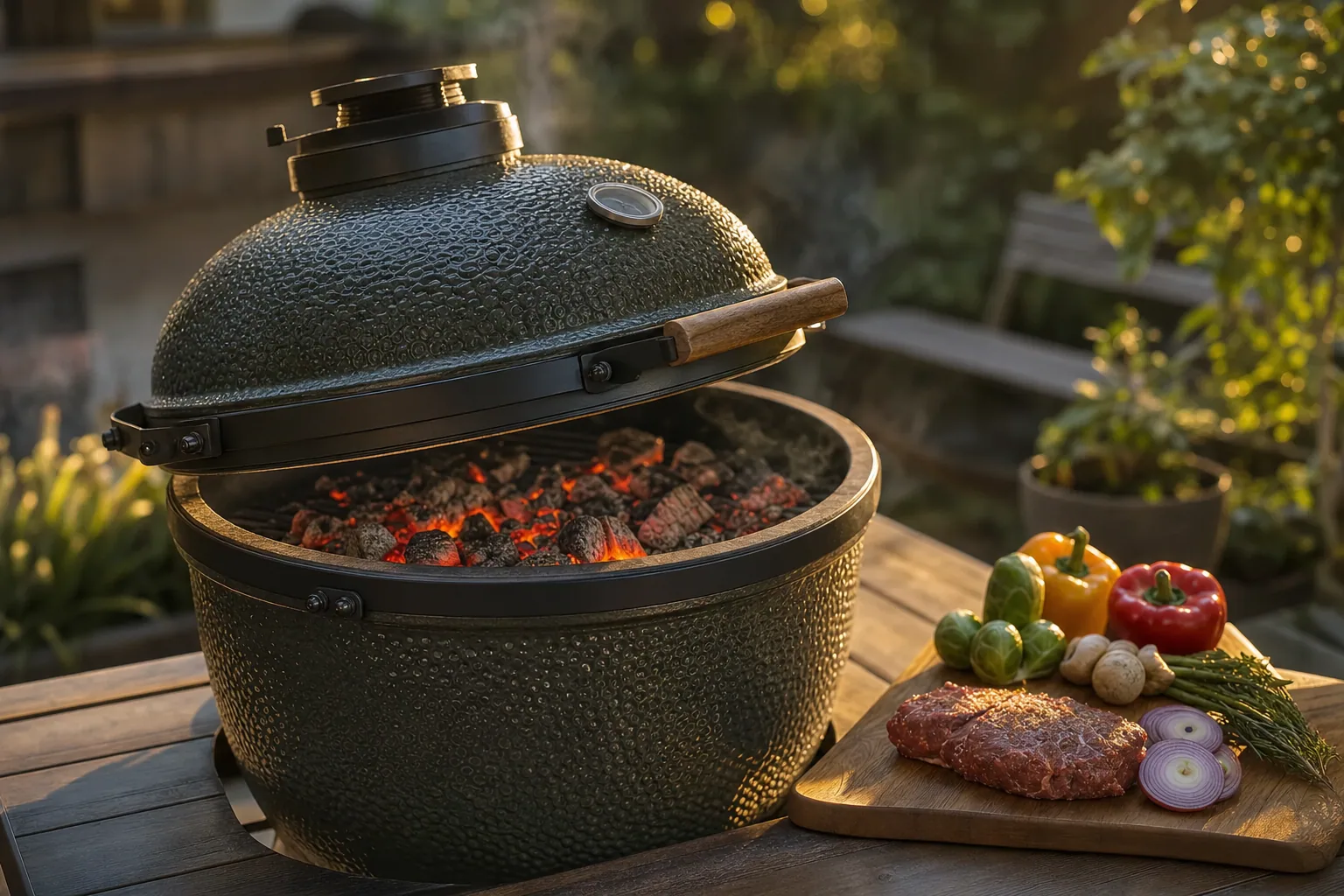
Kamado grills represent a unique cooking experience that combines ancient culinary tradition with modern outdoor entertaining. If you're new to kamado cooking, the learning curve might seem steep, but understanding the basics of how to use a kamado grill will unlock incredible versatility in your backyard kitchen.
Unlike traditional gas or charcoal grills, a kamado's ceramic construction and design offer superior heat retention and precise control. Whether you're planning a casual family dinner or hosting a gathering, mastering the fundamentals will give you confidence and consistent results.
Understanding Your Kamado Grill Basics
A kamado grill is an egg-shaped ceramic cooker that burns charcoal as its fuel source. The ceramic walls are incredibly thick, which means they absorb and radiate heat evenly. This design makes a kamado exceptionally fuel-efficient and capable of maintaining any temperature from 200 degrees Fahrenheit for low-and-slow smoking all the way up to 700+ degrees for high-heat searing.
The key components you need to know are the bottom vent, the top vent, and the cooking grate. The bottom vent controls air intake, while the top vent (called the daisy wheel or chimney cap) manages exhaust. Together, these two vents regulate the internal temperature and cooking environment.
Kamado Joe, the brand available through Prime Grill Shop, manufactures ceramic kamado grills that range from compact 18-inch models to the larger Big Joe series. Each size cooks differently and suits different needs, but the fundamental principles of temperature control and operation remain the same.
Setting Up Your Kamado for Success
Before your first cook, proper setup matters. Start by placing your kamado on a stable, level surface away from flammable materials and structures. The grill should be protected from direct wind, which can interfere with temperature control.
Fill the firebox with quality charcoal, mounding it in the center. Some people use a charcoal starter basket to speed up the lighting process, but you can also light the charcoal in a chimney starter and pour it into the grill. Avoid lighter fluid, as it imparts unwanted flavors to your food.
Once the charcoal is lit and glowing, place the cooking grate in your desired position. Kamado grills offer adjustable grate heights, which affects how close your food sits to the heat source. For high-temperature cooking like searing steaks, position the grate closer to the coals. For smoking and slow cooking, place it higher.
Kamado Grill Temperature Control Explained
Mastering kamado grill temperature control is the foundation of confident cooking. The process is straightforward once you understand the relationship between your vents and the heat inside.
To raise the temperature, open both the bottom and top vents wider. This increases oxygen flow to the charcoal, making it burn hotter. To lower the temperature, gradually close both vents slightly. The beauty of a kamado is that you can fine-tune temperatures in small increments by making minor vent adjustments.
Here's a practical approach to temperature management:
- Light your charcoal and let it burn for 10 to 15 minutes until it's mostly glowing
- Open both vents fully and monitor the temperature with a reliable thermometer
- As the internal temperature climbs toward your target, start closing the vents in small increments
- Once you reach your desired temperature, make micro-adjustments to maintain it
- Remember that kamados respond slowly to vent changes, so avoid over-correcting
Most kamado owners use an external thermometer mounted on the dome or a digital temperature gauge to monitor heat levels accurately. This removes guesswork and ensures your food cooks as intended.
Cooking Techniques for Different Styles
One reason kamado grills appeal to serious backyard cooks is their versatility. You can smoke a brisket for 12 hours at 225 degrees, grill chicken breasts at 400 degrees, or sear a steak at 650 degrees, all on the same grill.
For smoking and slow cooking, set your temperature between 225 and 275 degrees Fahrenheit. Keep the top vent slightly more open than the bottom vent to allow smoke to escape. This creates the low-and-slow environment that develops deep, complex flavors. Wood chips or chunks added to the charcoal enhance smoke flavor.
For direct grilling, position your food directly over the coals at higher temperatures, typically 400 to 600 degrees. Sear meats quickly to develop a flavorful crust while keeping the inside tender and juicy.
For indirect cooking, move the coals to the side or use a heat deflector plate, which creates a convection oven effect. This method works beautifully for roasting vegetables, baking pizza, or cooking whole chickens at moderate temperatures of 350 to 450 degrees.
Common Beginner Mistakes to Avoid
New kamado users often make a few predictable errors. The most common is making large vent adjustments and then not waiting for the temperature to stabilize. Kamados have thermal mass, meaning they respond gradually to vent changes. Be patient and make small adjustments, waiting 5 to 10 minutes between changes.
Another mistake is using too much charcoal. You don't need a completely full firebox for every cook. A well-filled grill bed gives you flexibility and extends your fuel supply. Start with a mounded amount and adjust based on how long you're cooking.
Newcomers also sometimes neglect ash buildup. Over time, ash accumulates in the bottom of the grill and can restrict airflow. Clean out the firebox after every few cooks to maintain optimal performance.
Finally, resist the temptation to open the lid constantly. Every time you lift the dome, you lose heat and moisture, affecting cooking time and results. Plan your moves, and when you do open the lid, do it deliberately.
Maintenance and Long-Term Care
Kamado grills are built to last for decades when properly maintained. The ceramic exterior should be wiped down occasionally to remove dirt and moisture. Avoid harsh cleaners that can damage the glaze.
Internally, remove ash regularly using a grill brush or ash rake. Protect the grill cover from the elements by storing it when not in use or investing in a waterproof cover. Keep the vents clean and free of debris so they operate smoothly.
If you own a Kamado Joe model, you'll appreciate the durable construction and availability of replacement parts. Prime Grill Shop offers Kamado Joe grills backed by full manufacturer warranties, so you're protected if anything fails unexpectedly.
Moving Forward with Confidence
Learning how to use a kamado grill opens a world of cooking possibilities. The combination of precision temperature control and exceptional versatility makes it an excellent choice for anyone serious about outdoor cooking and entertaining.
Start with simple cooks like grilled chicken or burgers to get comfortable with your grill's behavior. Once you understand how your specific kamado responds to vent adjustments and heat management, you'll feel confident tackling more ambitious projects like smoking briskets or baking pizzas.
If you're ready to invest in a quality kamado grill for your backyard, Prime Grill Shop carries Kamado Joe models in various sizes, all backed by free shipping, full manufacturer warranties, and expert U.S.-based customer support. Reach out to the team by phone if you have questions about which size or model fits your needs best.