
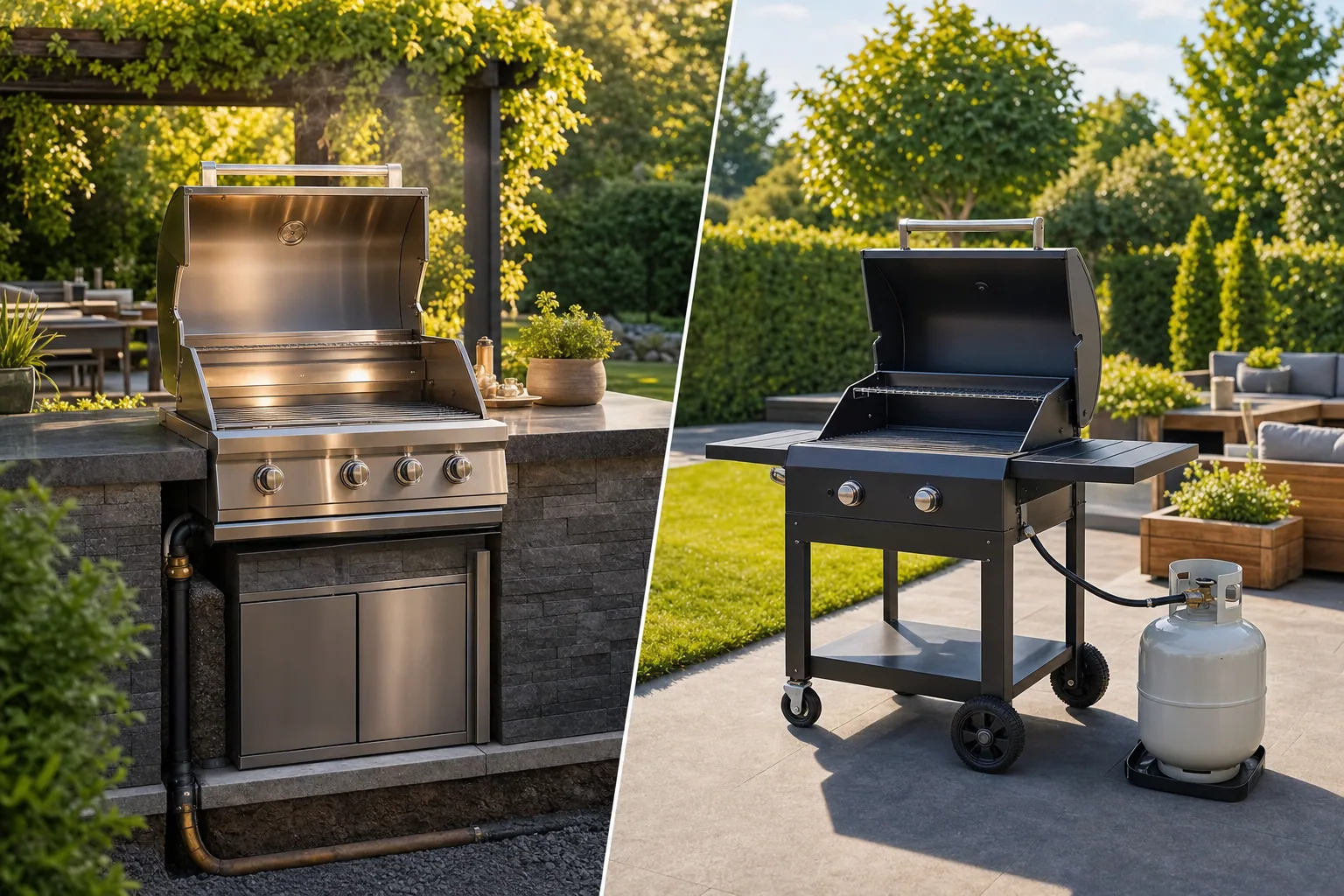
When you're ready to invest in a premium grill for your backyard, one of the first decisions you'll face is whether to go with a natural gas or propane model. Both fuel types deliver reliable, flavorful grilling, but they come with distinct advantages and trade-offs. Understanding these differences will help you choose the right grill for your home and cooking style.
Understanding the Fuel Sources
Natural gas and propane are both fossil fuels that power outdoor grills, but they arrive at your home differently. Natural gas comes through underground pipes connected directly to your house, much like the gas that heats your home or powers your stovetop. Propane, by contrast, is stored in a tank that sits outside your home and needs to be refilled periodically.
This fundamental difference shapes everything from installation requirements to ongoing maintenance and convenience. Your choice ultimately depends on what's available at your property and how you prefer to manage fuel supply.
Installation and Setup
Natural gas grills require a dedicated gas line from your home's utility connection to your patio or outdoor cooking area. If your home already has natural gas service, installation is straightforward, though you may need to hire a licensed technician to run new lines if your gas connection isn't near where you want to grill. This one-time installation cost can be significant, but once it's done, you have a permanent, built-in fuel source.
Propane grills are far simpler to install. You connect a propane tank to the grill's valve, and you're ready to cook. There's no need for professional installation or permanent modifications to your property. This flexibility makes propane grills ideal if you're renting, if you frequently move your grill around the yard, or if running gas lines isn't practical.
Ongoing Fuel Availability and Costs
With a natural gas grill, you'll never run out of fuel mid-cookout. As long as your gas utility is operating, you have unlimited access to cooking fuel. You simply turn on the grill and start cooking, with no tanks to monitor or refill. This convenience appeals to homeowners who grill frequently and value the peace of mind of a constant supply.
Propane grills require you to keep track of tank levels and arrange for refills. Running out of propane mid-meal is frustrating, so many grill owners keep a backup full tank on hand. You can refill propane tanks at most hardware stores, gas stations, and propane retailers, making refills convenient if not quite as seamless as natural gas.
Fuel costs vary by region and market conditions, but propane prices tend to fluctuate more than natural gas rates. Natural gas is generally more cost-effective for frequent grilling, while propane can be competitive if you grill occasionally.
Performance and Cooking Quality
Both natural gas and propane grills deliver excellent cooking results when properly maintained. The flame temperature and heat output are comparable, so you'll achieve the same sear, crust, and char on your steaks, burgers, and vegetables. Propane actually burns slightly hotter than natural gas, though the difference is minimal and won't noticeably affect your cooking.
One practical difference is that propane performs better in cold weather. In frigid temperatures, propane can become harder to vaporize and may lose pressure, making it less reliable in winter grilling scenarios. Natural gas is unaffected by cold temperatures, making it the better choice if you live in a climate where winter grilling is common.
Portability and Flexibility
If you like to move your grill around the yard, take it to a friend's house, or relocate it seasonally, propane offers superior flexibility. You simply disconnect the tank and move the grill wherever you want. Natural gas grills are essentially permanent fixtures, tethered to the gas line that feeds them.
For those with fixed outdoor entertaining spaces and a desire for convenience, natural gas is the way to go. For those who value flexibility or who haven't yet decided where their grill's permanent home will be, propane provides options.
Making Your Choice
Choosing between natural gas vs propane depends on your specific situation:
- Choose natural gas if: You grill frequently, you have an existing gas connection on your property or are willing to install one, you want unlimited fuel availability, and you prefer the ultimate in convenience.
- Choose propane if: You want simple installation without professional help, you value portability, you grill occasionally, or your property doesn't have natural gas service.
At Prime Grill Shop, we carry premium grills in both natural gas and propane models from trusted brands like Napoleon, Summerset, and TrueFlame. Our authorized dealer status means every grill comes with a full manufacturer warranty and U.S.-based customer support to help you with any questions about fuel type, installation, or performance. Whether you're leaning toward a sleek propane model or a permanently connected natural gas setup, we're here to help you find the perfect grill for your backyard entertaining.
The best grill is the one that fits your home, your cooking habits, and your lifestyle. Both natural gas and propane options deliver delicious results and years of outdoor cooking enjoyment. Take time to consider your property layout, fuel access, and grilling frequency. Then reach out to our team at Prime Grill Shop to explore premium models and get personalized guidance on which fuel type is right for you.