
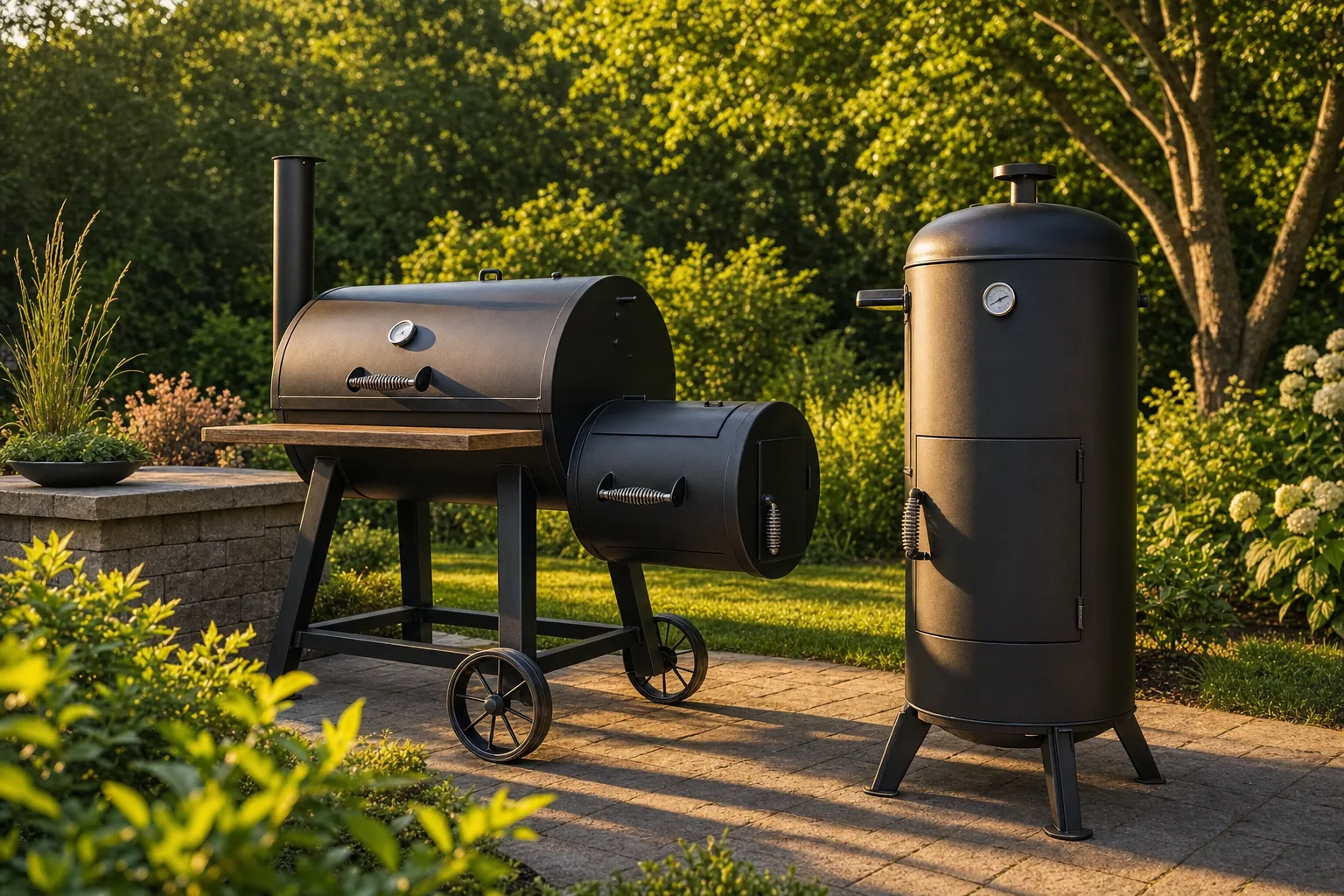
When you're ready to invest in a premium smoker, understanding the fundamental design differences between offset and vertical models is crucial. Both excel at slow-and-low cooking, but they achieve results through distinctly different approaches to heat management, capacity, and ease of use. Let's explore how these two popular smoker designs compare and what each brings to your outdoor kitchen.
What is an Offset Smoker?
An offset smoker features a horizontal barrel-shaped main chamber connected to a firebox on the side. This design creates a natural heat flow: smoke and hot air are produced in the firebox, travel across the main cooking chamber, and exit through a chimney on the opposite end.
The offset configuration means heat enters the cooking chamber indirectly. This indirect heat path is what makes offset smokers so effective for low-and-slow smoking. The temperature gradient across the chamber, with hotter zones near the firebox and cooler zones at the far end, gives experienced pitmasters a lot of flexibility for different smoking techniques.
Offset smokers are typically the larger, more stationary choice. They often become a permanent fixture in a backyard or outdoor kitchen space, and their size accommodates impressive cooking capacities.
What is a Vertical Smoker?
A vertical smoker stacks multiple cooking racks inside a tall, cylindrical chamber. Heat enters from below, rises through the food, and exits from the top. This simple, direct path means heat and smoke move vertically through your meat.
Vertical smokers are often more compact and take up less ground space than their offset counterparts. Their smaller footprint makes them a popular choice for homeowners who want dedicated smoking capability without dominating the backyard. Many vertical smokers are also portable or semi-portable, giving you flexibility in placement.
The vertical design is straightforward and forgiving, making it a good entry point for people new to smoking. Temperature control is often simpler, and the straightforward airflow means fewer hot spots to manage.
Heat Distribution and Temperature Control
This is where offset and vertical smoker designs diverge most noticeably.
In an offset smoker vs vertical design, heat management works very differently. Offset smokers create what's called a "thermal gradient." Heat is strongest near the firebox and cooler at the exhaust end. This variation lets you position different cuts of meat in zones suited to their cooking needs. If you want a hotter side for searing or faster cooking, and a cooler side for delicate work, an offset gives you that built-in advantage.
Vertical smokers distribute heat and smoke more evenly from bottom to top. Each rack sits in roughly the same temperature zone. This consistency is easier to manage, especially if you're learning, but it offers less flexibility if you want to cook foods that need different temperature zones simultaneously.
Temperature swings are more pronounced in offset smokers because the firebox is a separate chamber. Every time you add wood or adjust airflow, you're directly changing the firebox heat, which takes time to stabilize across the cooking chamber. Vertical smokers, with their contained design, often respond more quickly to airflow adjustments and can hold temperature more steadily.
Cooking Capacity and Space
Size is one of the most practical differences to consider.
Offset smokers are built for volume. Their barrel-shaped main chamber provides expansive cooking surface. If you're smoking briskets, multiple racks of ribs, and whole chickens for a large gathering, an offset smoker gives you the real estate to do it all at once. Many people who take backyard entertaining seriously choose offset models specifically for this capacity.
Vertical smokers work with less square footage. The stacked-rack design packs smoking capacity into a smaller ground footprint. This is ideal if you have limited backyard space or want to maintain room for other outdoor kitchen elements like a grill or pizza oven. You can still smoke plenty of food in a vertical model, but you might need to adjust portion sizes or plan multiple smoking sessions for very large gatherings.
Think about your typical entertaining scale. A family of four smoking a brisket or pork shoulder weekly? A vertical smoker handles that easily. Regular parties with eight to twenty guests and multiple cuts of meat? An offset's capacity becomes a significant advantage.
Fuel Efficiency and Smoke Production
Both designs use wood or charcoal as fuel, but consumption rates differ.
Offset smokers require continuous fuel management. Because heat is generated separately in the firebox, you're actively maintaining a fire throughout your cook. This means more frequent wood or charcoal additions and higher total fuel consumption. However, this continuous fire is also what creates excellent smoke flavor and the characteristic bark on your meat.
Vertical smokers, especially smaller models, use fuel more efficiently. Once you establish temperature, they hold it with less intervention. This efficiency is appealing for all-day smokes where you want less hands-on management.
Smoke production is hearty in both designs, but offset smokers often deliver deeper smoke penetration into the meat because smoke has more time and distance to travel through the food as it crosses the chamber. Vertical designs give you good smoke flavor with less exposure time.
Which Should You Choose?
Your choice between offset and vertical smoker designs depends on several practical factors:
- Space: Limited backyard real estate points toward vertical; ample room favors offset.
- Entertaining scale: Frequent large gatherings benefit from offset capacity; casual family smoking suits vertical well.
- Hands-on cooking: If you enjoy active temperature management and flavor control, offset offers more tools. If you prefer simplicity and consistency, vertical wins.
- Budget: Offset smokers typically cost more upfront due to size and materials, though both represent solid long-term investments in outdoor entertaining.
- Permanence: Offset models anchor a space and suit built-in outdoor kitchens. Vertical models work well as standalone units you can reposition.
Finding Your Perfect Smoker
Both offset and vertical smoker designs deliver authentic low-and-slow smoking results. The offset excels at capacity, smoke flavor, and temperature zones for advanced techniques. The vertical delivers simplicity, space efficiency, and reliable temperature control.
The best choice is the one that fits your entertaining vision, your backyard layout, and your cooking style. Visit Prime Grill Shop to explore premium smokers from trusted brands and speak with our team about which design aligns with your outdoor kitchen goals. With free shipping on all orders and full manufacturer warranties, you can invest in the right smoker with confidence.