
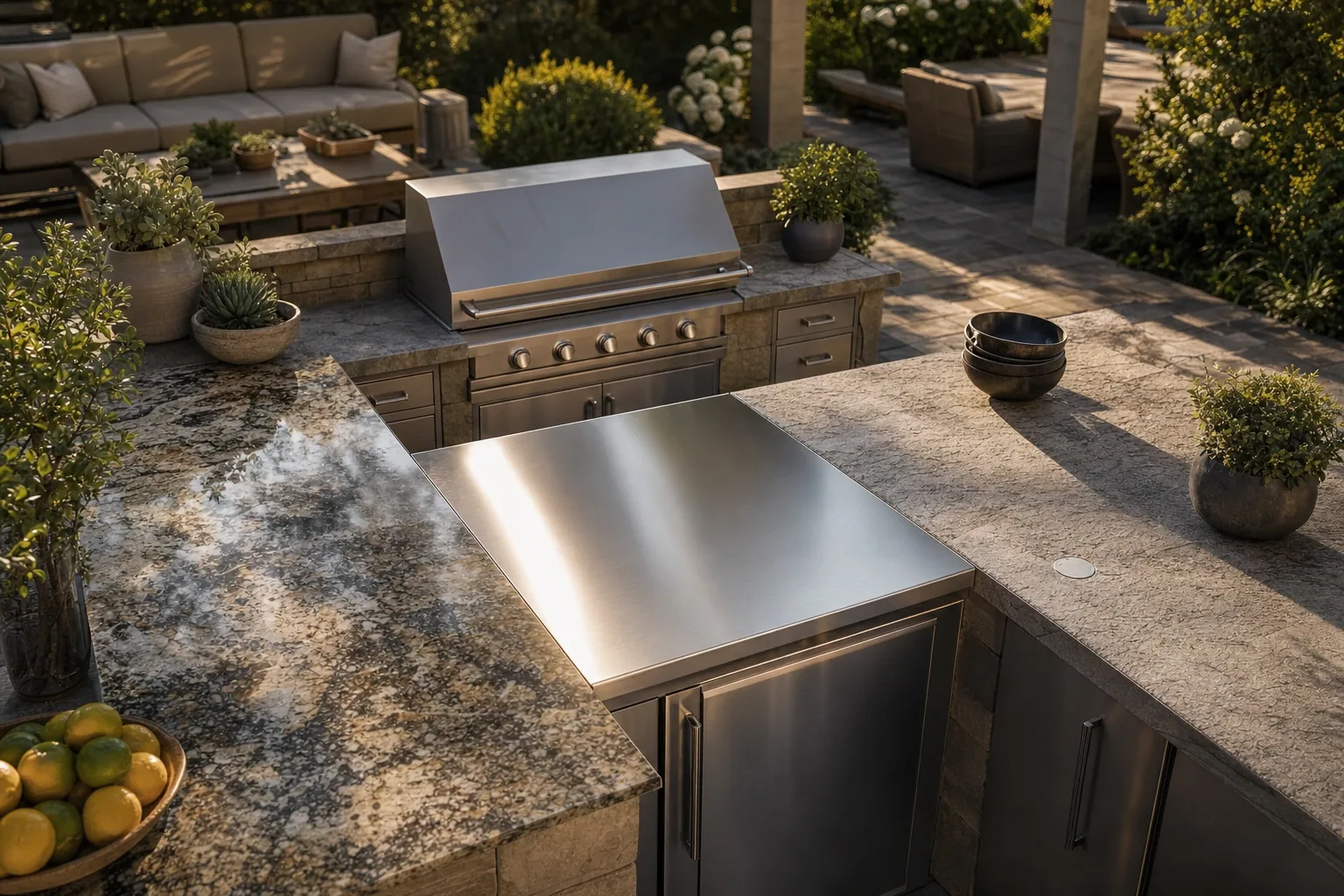
When planning an outdoor kitchen, choosing the right countertop material is just as important as selecting your grill. Your countertops will anchor the entire space, handle daily prep work, and endure sun, rain, temperature swings, and heavy use. The best countertop material for your outdoor kitchen depends on your budget, climate, cooking style, and how much maintenance you're willing to do.
Unlike indoor kitchens where aesthetics often lead the conversation, outdoor countertops must balance beauty with resilience. They sit exposed to the elements year-round, which means durability matters more than in any other part of your home.
Granite Outdoor Kitchen Countertops
Granite has long been a favorite for outdoor kitchen countertops, and with good reason. This natural stone is one of the hardest materials available, making it resistant to scratches, heat, and impact. Granite's distinct veining and color variation give each countertop a unique appearance that can elevate your backyard's aesthetic.
The appeal of granite outdoor kitchen countertops lies in their timeless elegance and proven durability. A well-maintained granite counter can last decades. However, granite does require sealing every one to three years to prevent water penetration and staining. Since it's porous, spills need to be wiped up promptly, especially oils and acidic substances like citrus or vinegar.
Granite also absorbs and radiates heat differently than other materials, which some homeowners appreciate during cooler evenings but others find less practical during summer cooking sessions. Cost-wise, granite sits in the mid-to-premium range, typically running $50 to $100+ per square foot installed.
Stainless Steel Outdoor Countertops
Stainless steel outdoor countertops offer a sleek, professional look that complements high-end grills and outdoor appliances. Food-grade stainless steel is naturally resistant to rust and corrosion, making it an excellent choice for areas with salt spray or high humidity.
One major advantage of stainless steel is minimal maintenance. It requires only regular wiping with mild soap and water, and occasional polishing to maintain shine. Unlike granite or other porous materials, stainless steel won't stain or harbor bacteria. It also dissipates heat quickly, staying cooler to the touch during hot days.
The downsides are real, though. Stainless steel scratches easily and shows fingerprints unless kept polished. It can dent if struck with heavy objects, and some homeowners find its industrial aesthetic either stunning or cold, depending on their design preferences. Costs typically range from $60 to $150+ per square foot, putting it in the premium category alongside granite.
Outdoor Kitchen Countertop Materials: Stone and Tile Options
Beyond granite, several other stone materials perform well outdoors. Soapstone is naturally non-porous, requires no sealing, and develops a beautiful patina over time. Quartzite offers granite-like aesthetics with added durability and less maintenance. Bluestone and slate provide rustic charm and excellent weather resistance, though slate is softer and more prone to chipping.
Ceramic and porcelain tile countertops are increasingly popular for outdoor kitchens. Porcelain tile is durable, low-maintenance, and available in countless colors and patterns. Large-format tiles (12x24 inches or bigger) minimize grout lines, which can trap dirt. Grout itself requires sealing in areas with freeze-thaw cycles to prevent cracking.
Tile allows budget flexibility. You can achieve a custom look for $20 to $60 per square foot, making it accessible for homeowners who want style without the premium price tag of natural stone.
Concrete Countertops for Outdoor Spaces
Custom poured concrete countertops have become trendy in outdoor kitchens. They're durable, customizable with colors and finishes, and can be molded into unique shapes and integrated with your grill island. Concrete is also relatively affordable at $25 to $50 per square foot.
The catch: concrete is porous and will stain, crack, and absorb water unless sealed regularly. It requires annual or biannual resealing with a food-safe product. In freeze-thaw climates, concrete can spall and develop fissures. Some homeowners love the industrial or modern aesthetic; others find concrete too plain. If you're committed to maintenance, concrete works well. If you want a set-it-and-forget-it countertop, look elsewhere.
Choosing the Best Material for Your Climate
Your geographic location should heavily influence your decision. In warm, dry climates, porous materials like granite or concrete work fine since water penetration isn't a major threat. In humid or rainy regions, non-porous options like stainless steel, porcelain tile, or sealed stone are safer bets.
If you live where winters bring freeze-thaw cycles, avoid unsealed porous materials that absorb water and crack when frozen. Stainless steel, porcelain, and sealed quartzite handle these conditions better.
Salt spray near coastal areas demands corrosion-resistant materials. Stainless steel thrives here, while unsealed or weakly sealed stone will deteriorate. Concrete will stain rapidly in salt environments.
Comparing Cost, Maintenance, and Longevity
When evaluating outdoor kitchen countertop materials, weigh three factors: installation cost, ongoing maintenance, and expected lifespan.
Granite offers mid-range costs and long life but demands regular sealing. Stainless steel costs more upfront but requires minimal upkeep. Tile gives you budget flexibility and ease of replacement if one tile cracks. Concrete is affordable but high-maintenance. Stone options like soapstone or quartzite cost more but offer excellent durability with varied maintenance needs.
Think of your countertop as part of your larger outdoor kitchen investment. Pairing a premium grill with a poorly chosen countertop that requires constant repair or replacement undermines the entire experience. The best countertop material is one that complements your appliances, fits your climate, matches your lifestyle, and brings you confidence every time you step into your backyard.
Next Steps: Planning Your Outdoor Kitchen
Once you've settled on countertop materials, you're ready to think about layout, placement of your grill and appliances, and the overall flow of your outdoor cooking space. The right countertop material is the foundation that lets you focus on what matters most: gathering with family and friends around great food.
If you're planning a full outdoor kitchen or selecting a premium grill to anchor your space, Prime Grill Shop's team is here to help. With expertise in outdoor kitchen design and a curated selection of luxury appliances, we can help you make decisions with confidence.