
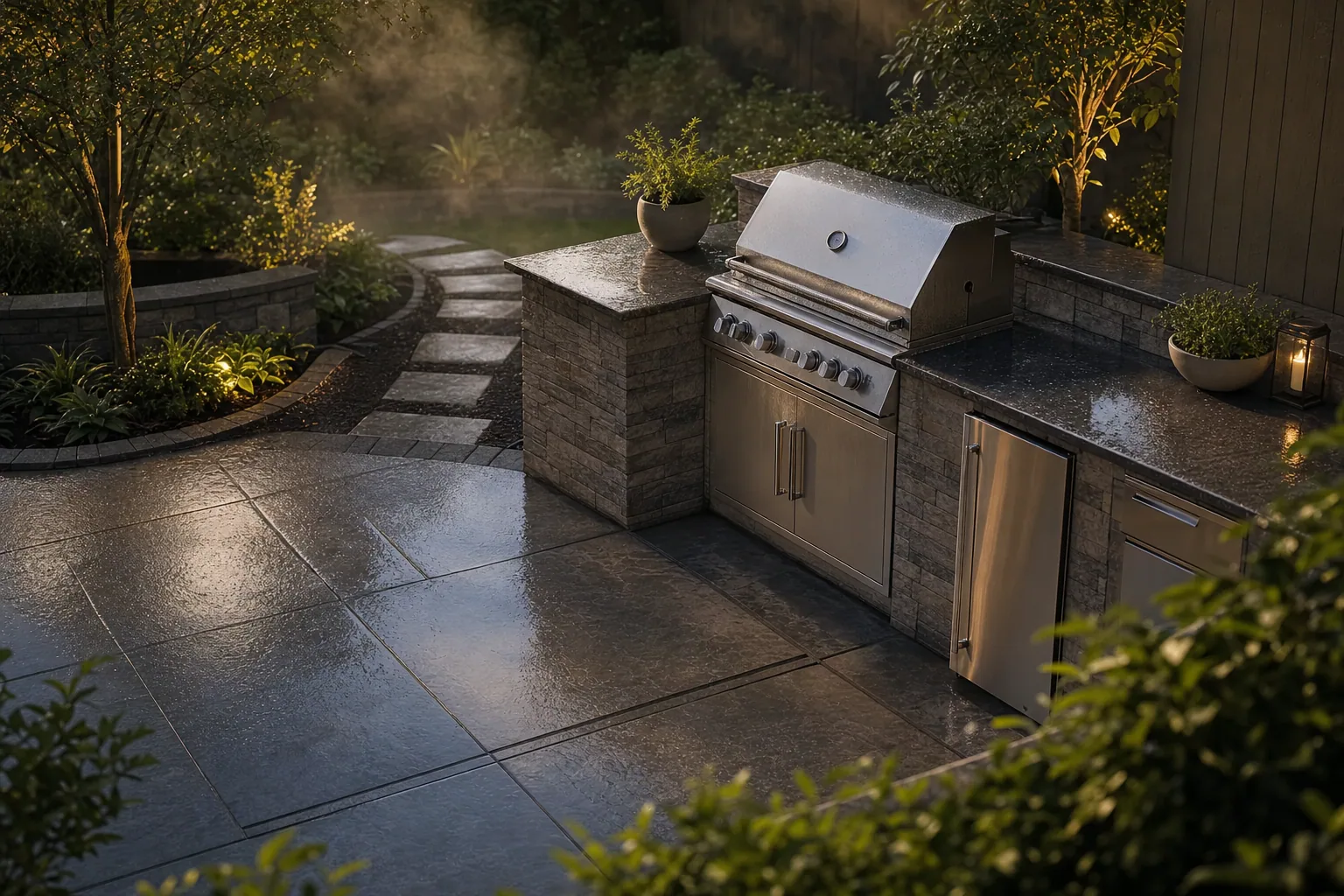
Building an outdoor kitchen is a significant investment in your home and lifestyle. But even the finest grills and appliances from brands like Napoleon, Summerset, and TrueFlame will perform poorly, or worse, if water pools around them or drains improperly. Outdoor kitchen drainage and grading are often overlooked during planning, yet they are fundamental to protecting your equipment and ensuring the space stays functional year-round.
When you pour a patio and install premium cooking equipment, you need to think like water does. Water will find the lowest point, and if that happens to be underneath your grill or next to your refrigeration unit, you are looking at rust, corrosion, electrical damage, and shortened equipment life. Proper grading and drainage keep water moving away from your appliances and your feet, so you can focus on cooking and entertaining.
Why Drainage Matters in Outdoor Kitchens
Unlike an indoor kitchen with plumbing designed to handle water, your outdoor space deals with rain, morning dew, hose spray, and splash-back from washing dishes. Without thoughtful drainage, water accumulates in low spots and seeps under or beside your equipment.
Here's what happens when drainage fails:
- Rust and corrosion on stainless steel grills and appliances, even high-end models
- Electrical failures in built-in fridges, icemakers, and side burners
- Cracked concrete or pavers that shift and become a tripping hazard
- Mold and mildew growth on surrounding surfaces
- Foundation damage beneath the patio itself
- Mosquito breeding grounds in standing water
Proper drainage protects your investment. Premium grills are built tough, but they still need protection from the elements. The same goes for refrigeration and beverage products you may include in your outdoor kitchen.
Understanding Grading Basics
Grading is simply the slope of your patio surface. Water needs a place to go, and that place should never be toward your grill or under your feet.
The general rule is a slope of 1 percent to 2 percent away from structures and equipment. In plain terms, that means for every 100 feet of patio, the surface should drop between 1 and 2 feet in elevation. It sounds subtle, and it is, but it makes all the difference. You might not even notice the slope visually, yet water will drain reliably.
When planning your outdoor kitchen layout, work with a landscape designer or contractor who understands grading. They will establish the high point of your patio near your home (or near where you want to avoid water) and slope it gradually toward drainage.
Drainage Solutions for Outdoor Kitchens
There are several ways to handle water once you have graded your patio:
Surface Drainage
The simplest approach is relying on slope alone. If your patio is pitched correctly, rain and water naturally flow downhill and away from your equipment. This works well in most climates, but it requires proper initial grading and regular maintenance.
French Drains
A French drain is a shallow trench filled with gravel and a perforated pipe. It sits just below the surface around the perimeter of your patio or in problem areas where water pools. Water seeps into the gravel, enters the pipe, and is channeled away from your outdoor kitchen. This is especially useful in areas with heavy rain or clay soil that does not absorb water easily.
Permeable Pavers
Instead of solid concrete, permeable pavers allow water to drain through the joints and into the soil below. They look similar to standard pavers but handle water much better. Pair them with a gravel base designed to absorb and filter water, and your patio becomes its own drainage system.
Catch Basins and Drain Grates
For areas where water is likely to collect, install a drain grate that channels water into an underground drain system. These are common around the edges of patios or near sinks in outdoor kitchens. They require connection to a drain line or dry well, but they are effective in high-water-risk zones.
Planning Drainage During Design
Drainage should be part of your outdoor kitchen plan from the start, not an afterthought. Before you buy a grill or other appliances, think about how water moves across your yard.
Start by observing your property after rain. Where does water naturally flow? Are there low spots where puddles form? Does water run toward your house, away from it, or toward a neighbor's property? Understanding your site drainage tells you where your patio should slope.
Next, consider the location of your outdoor kitchen. If possible, place it on naturally higher ground or on a slope that already drains well. This reduces the work and expense needed to manage water. If you must build on flat or low ground, your drainage system will need to be more active and involved.
When positioning equipment, leave space around grills, refrigeration units, and other appliances for water to flow past them, not under them. A grill sitting in a depression of its own is a guaranteed problem. A grill on a slope with clear drainage paths is protected.
Grading and Drainage for Different Patio Materials
Your choice of patio surface affects how you handle drainage.
Concrete is solid and does not absorb water, so it relies entirely on slope and external drainage. Proper grading is essential. You may also cut control joints in the concrete to direct water flow.
Pavers and flagstone can be laid with wider or narrower joints depending on your climate and drainage needs. Wider joints with proper base material offer better water movement.
Composite or permeable pavers are designed to let water through. They are more forgiving of minor grading issues but still benefit from slope.
Gravel or crushed stone is naturally permeable and requires the least formal drainage, though it can shift over time and needs maintenance.
Talk to your contractor about which material suits your site drainage and climate. The initial planning pays dividends in equipment longevity and usability.
Maintenance and Long-Term Care
Even with perfect grading and drainage installed, you need to maintain it. Over time, patios can settle or shift, gutters can clog, and drain lines can become blocked by leaves and debris.
Inspect your drainage system after heavy rain. Is water pooling anywhere? Are gutters or drain grates clogged? Are there new low spots in the patio surface? Catching small problems early prevents them from becoming costly repairs.
Keep gutters and drain grates clean, especially in fall when leaves accumulate. If you notice water standing near your grill or appliances, address it immediately. You might need to add a French drain, regrade a section, or install a catch basin.
Bringing It All Together
Your outdoor kitchen is built to host shared experiences with family and friends. Proper drainage and grading protect that investment and keep your space comfortable and functional. Whether you are planning a modest freestanding grill area or a full built-in outdoor kitchen with multiple appliances, take time to understand how water moves across your property and how to direct it safely away from your equipment.
Work with experienced professionals during planning, choose materials suited to your climate and site conditions, and maintain your drainage system once it is installed. The effort pays back in years of reliable equipment performance and countless gatherings with the people who matter most.