
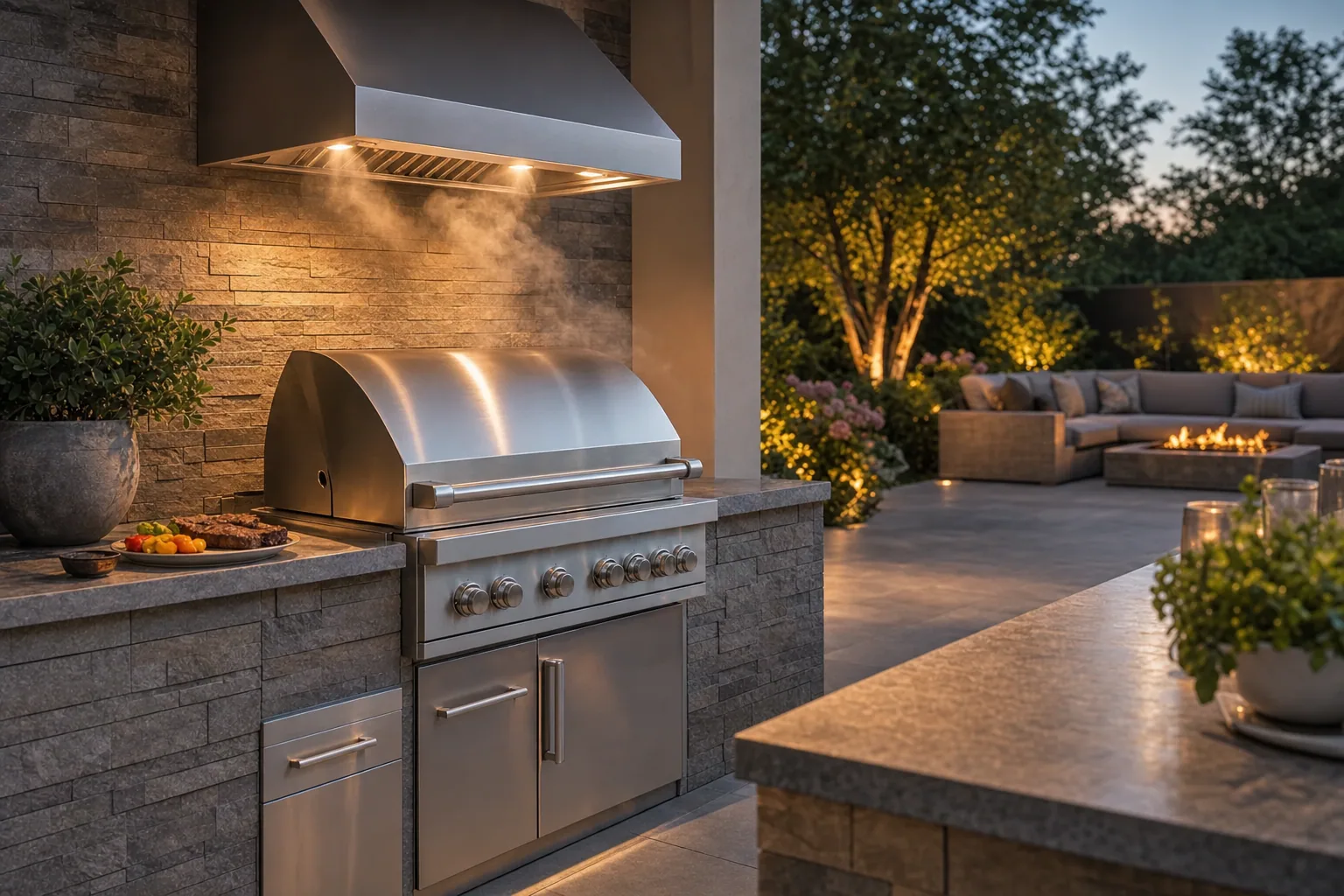
Outdoor kitchen ventilation is one of the most overlooked aspects of backyard entertaining, yet it makes the difference between a space you love using and one you avoid. Smoke, grease, and heat from cooking can linger in your space, drift toward guests, and even damage nearby structures or plants. Installing proper outdoor kitchen ventilation ensures your guests stay comfortable while protecting your investment in premium cooking equipment.
Why Outdoor Kitchen Ventilation Matters
When you cook on a high-performance grill or griddle, you're generating significant heat and smoke. Without proper ventilation, that smoke has nowhere to go. It settles around your seating area, clings to clothing, and can create an uncomfortable environment even when you're entertaining close friends and family.
Beyond comfort, smoke and grease vapor can damage wooden structures, stain nearby walls, and create buildup on outdoor appliances and surfaces. If your outdoor kitchen is adjacent to your home, inadequate ventilation can push smoke and odors back toward windows and doors. A well-designed range hood system captures these byproducts at the source and directs them safely away.
Proper ventilation also improves heat management. During a large cookout, a range hood helps dissipate the radiant heat rising from your grill, making the entire space more pleasant for your guests.
Types of Outdoor Range Hoods
Outdoor range hoods fall into two main categories, each with its own strengths.
Wall-Mounted Hoods
Wall-mounted range hoods attach directly to a vertical surface, typically an exterior wall or pergola behind your grill. They're ideal for built-in grill installations where you want a permanent, integrated look. Wall-mounted hoods tend to be powerful and can handle high volumes of smoke and steam. Many feature stainless steel construction to match premium grill brands and resist the outdoor elements.
The primary consideration with wall-mounted hoods is proper outdoor range hood installation. You'll need adequate vertical space and a surface that can support the weight. The hood should be positioned 24 to 30 inches above the grill grates for optimal performance.
Island-Style and Ceiling Hoods
Island hoods suspend from above and work well in freestanding outdoor kitchen layouts where there's no wall to anchor to. They create a striking visual centerpiece and provide excellent coverage from multiple angles. These hoods require overhead support, such as a pergola or dedicated framing, so plan your space accordingly.
Outdoor Range Hood Installation Considerations
Installing a range hood outdoors differs significantly from indoor kitchen venting. Here are the key factors.
Clearance and Height
Position your range hood 24 to 30 inches directly above the grill grate. This height ensures the hood captures smoke and steam efficiently without being too close to cause discomfort or safety concerns. If your hood is too low, it can interfere with cooking; too high, and it won't capture smoke effectively.
Ductwork and Airflow
Outdoor range hoods can be ducted or ductless. Ducted hoods, where available, channel smoke directly outside, away from your space. Ductless hoods use filters to recirculate air. For serious outdoor entertaining, a ducted hood is preferable because it removes smoke entirely rather than just filtering it.
Make sure your ductwork has a clean path without sharp bends or long runs that restrict airflow. The more direct the vent path, the more effective the hood. If you're venting upward through a pergola or roof, ensure the duct exits high enough that smoke doesn't flow back down into your space.
Power and CFM
CFM (cubic feet per minute) measures how much air the hood moves. Outdoor environments require more power than indoor kitchens because side winds can disperse the hood's airflow. Look for hoods rated between 600 and 1200 CFM, depending on your grill size and cooking style. Larger grills and those used frequently should lean toward the higher end of that range.
Durability in Weather
Outdoor hoods must withstand rain, wind, temperature swings, and UV exposure. Stainless steel construction is essential. Check that all fasteners are stainless or galvanized to resist rust. Some hoods include weather-resistant seals and covers to protect the motor and electronics.
Planning Your Outdoor Kitchen Layout
Ventilation should shape your overall outdoor kitchen design. Position your grill so a range hood can be installed behind or above it. If you're planning a built-in setup, allocate wall space above the grill for a wall-mounted hood. Consider prevailing wind direction too. A hood works best when wind isn't pushing smoke sideways across your patio.
If your outdoor kitchen includes other appliances like a side burner or griddle, a larger or multi-unit hood system may be needed. Consulting with a professional about airflow patterns in your specific space can help you choose the right hood capacity and placement.
Maintenance for Long-Term Performance
Outdoor hoods need regular cleaning to perform well. Grease and debris accumulate on filters and fan blades, reducing airflow. Clean or replace filters every month or two during heavy use. Wipe down the hood exterior seasonally to prevent corrosion and buildup. If your hood has a ductless design, replace filters as recommended by the manufacturer.
Inspect seals and weatherstripping annually and replace them if they crack or shrink. This keeps moisture and pests out of the motor housing.
Choosing the Right Hood for Your Grill
Your choice of range hood should match your grill and cooking style. If you own a premium built-in grill from a brand like Napoleon or Summerset, look for hoods from the same manufacturer or reputable outdoor specialists that complement the finish and construction quality. Many outdoor kitchen appliances are designed to work together seamlessly, so coordinating ventilation ensures a cohesive, professional look.
Consider how often you cook and entertain. Weekend grillers may be satisfied with a mid-range hood, while frequent entertainers should invest in a powerful, durable model that handles heavy-duty use.
Conclusion
Outdoor kitchen ventilation is an investment that pays dividends in comfort and durability. A properly sized and installed range hood lets you enjoy your backyard space without worrying about smoke, heat, or odors. Take time to assess your layout, choose the right hood type, and ensure it's positioned correctly for optimal performance.
When you're planning or upgrading your outdoor kitchen, consider ventilation from the start. The team at Prime Grill Shop understands how premium outdoor cooking equipment works best in a well-designed space, and they're ready to help you select grills, hoods, and other appliances that complement each other. Call (720) 600-7228 to discuss your outdoor kitchen vision and get personalized guidance on creating a space where entertaining feels effortless.