
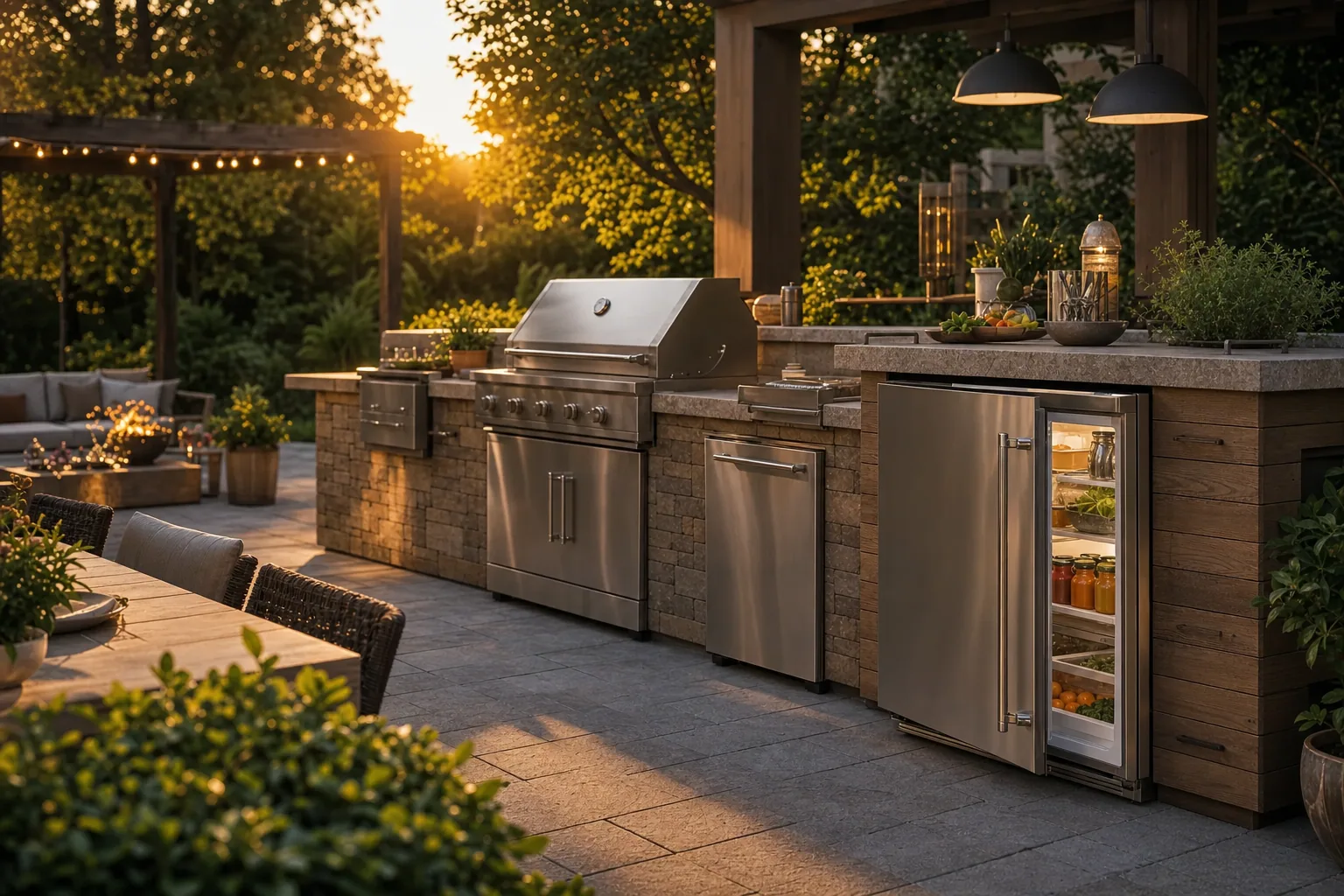
When you're investing in a premium outdoor refrigerator as part of your backyard entertaining space, understanding outdoor refrigerator dimensions is crucial. A unit that's too large wastes space and money. One that's too small leaves you constantly restocking during gatherings. The right size sits at the intersection of your entertaining style, available space, and how you actually use your outdoor kitchen.
Picking the correct capacity and dimensions takes some thought upfront, but it's worth the effort. It ensures your fridge fits seamlessly into your outdoor kitchen layout and meets your real-world entertaining needs.
Understanding Outdoor Refrigerator Dimensions
Outdoor refrigerators come in several standard sizes, each designed for different spaces and entertaining styles. The most common widths are 15 inches, 24 inches, and 32 inches. These measurements refer to the exterior width of the unit.
Depth typically ranges from 22 to 28 inches, which is important to know if you're fitting a fridge into a built-in space or custom cabinetry. Height varies too, but most models fall between 32 and 36 inches, making them comfortable to access while standing at your outdoor kitchen counter.
Don't confuse exterior dimensions with interior usable space. A 24-inch fridge won't hold twice what a 15-inch model does because of wall thickness and design. When you're comparing models, check the cubic feet of storage capacity alongside the physical footprint.
Matching Capacity to Your Entertaining Style
Your entertaining habits should drive your sizing decision more than anything else.
If you host small gatherings on weekends, maybe four to eight people, a compact 15-inch unit with 4 to 5 cubic feet of capacity typically handles beverages and light snacks. These models fit easily in tight spaces and work well as a supplement to your kitchen fridge.
For regular entertaining with larger groups, 10 to 15 people, a 24-inch refrigerator with 8 to 10 cubic feet provides genuine flexibility. You can stock beverages, deli items, condiments, and leftovers without juggling. This is the sweet spot for most dedicated outdoor kitchens.
If you entertain frequently or host larger gatherings regularly, consider stacking units or opting for a larger 32-inch model. These hold 15+ cubic feet and function almost like a second full-size kitchen fridge.
Wine and beverage coolers are another option. A dedicated wine cooler uses space efficiently for serious entertainers who focus on wine, beer, or specialty beverages rather than general food storage.
Planning Your Outdoor Kitchen Layout
Before you order, measure the space where your refrigerator will live. This sounds obvious, but many homeowners underestimate how important exact measurements are.
Measure twice. Account for doors, drawer pulls, handles, and ventilation clearance on the sides and back. Most outdoor fridges need 1 to 2 inches of air space behind them for proper cooling. Don't skip this step, or you'll end up with a unit that physically fits but runs inefficiently.
Consider workflow too. Where are your prep surfaces? How far is the fridge from your grill? Placing your refrigerator close to your main cooking area minimizes running back and forth during entertaining. If you're building out a complete outdoor kitchen setup with built-in appliances, work with your layout to create natural zones for prep, cooking, and beverage service.
Built-In vs. Freestanding Units
Built-in outdoor refrigerators are designed to fit flush into cabinetry or outdoor kitchen islands. They typically have finished sides and back panels, and their dimensions are optimized for integration. Built-ins often cost more upfront but create a seamless, custom look.
Freestanding units have vented sides and backs and can sit anywhere in your outdoor space. They're more flexible if you're still deciding on your final layout or planning to upgrade later. Freestanding models are also often more affordable.
Your choice affects how you think about dimensions. A built-in 24-inch fridge needs exactly 24 inches of cabinetry space (plus those ventilation clearances). A freestanding unit might sit on a deck or patio and just needs level ground nearby.
Practical Sizing Scenarios
Consider these real-world examples:
-
Small apartment patio or condo deck: A 15-inch compact fridge keeps drinks cold without dominating your outdoor space. Perfect for two to four people regularly using the area.
-
Growing family with weekend entertaining: A 24-inch fridge stores beverages for the family plus extra for neighbors and friends. Grows with your entertaining as kids get older and invite friends over.
-
Serious backyard entertainer: A 32-inch unit or dual smaller fridges let you stock beer, wine, sodas, water, and prepared foods for 15+ guests without restocking mid-party.
-
Wine and beer enthusiast: Skip general refrigeration and go straight to specialty coolers. A dedicated wine cooler or dual-zone model keeps your collection at perfect serving temperature.
Shopping for Your Outdoor Refrigerator
When you're ready to choose, focus on these factors alongside size:
-
Exterior finish: Stainless steel handles outdoor weather and matches premium grill and kitchen brands. Glass doors let you see contents without opening and add visual appeal.
-
Door swing: Does the door open left or right? Check your layout. Some models have reversible doors for flexibility.
-
Shelving configuration: Adjustable shelves adapt to what you store. Some models come with wine racks or bottle holders built in.
-
Warranty and support: As with any outdoor kitchen appliance, buy from an authorized dealer who stands behind the product. Full manufacturer warranties and U.S.-based customer support matter when you're investing in quality equipment.
Prime Grill Shop carries premium outdoor kitchen appliances sized from compact 15-inch units to larger 32-inch refrigerators. Since outdoor kitchens are an investment in shared experiences with family and friends, we help you choose the right capacity for your actual entertaining needs.
Final Thoughts on Outdoor Refrigerator Sizing
Getting the dimensions and capacity right upfront saves frustration later. Measure your space carefully, think honestly about how often and how many people you entertain, and choose a unit that feels proportional to your outdoor kitchen investment.
The best outdoor refrigerator for you is the one you'll actually use and love looking at. That happens when size and capacity match your entertaining style, not when you're chasing a trend or guessing at specifications. Take time to plan, and you'll end up with a fridge that makes your backyard gatherings easier and more enjoyable.