Pellet grills offer convenience and consistent results, but like any outdoor cooking equipment, they require regular care to perform at their best. Understanding how to maintain your pellet grill and recognize early warning signs can save you frustration, extend the life of your investment, and keep your backyard entertaining on track.
This guide covers the most common pellet grill maintenance tasks and walks you through troubleshooting the problems that pop up most often.
Why Regular Pellet Grill Maintenance Matters
A pellet grill is a precision machine. Wood pellets feed into a fire pot, where they ignite and create heat and smoke. When any part of that system gets clogged, wet, or misaligned, the grill struggles to maintain temperature, produce smoke, or even start up.
Routine maintenance is straightforward and takes just a few minutes per season. The payoff is consistent cooking performance, fewer mid-cook headaches, and a grill that lasts for years.
Clean the Grill Grates and Interior Regularly
Start with the basics. After every few cookouts, brush your grill grates clean while they're still warm. This removes grease and buildup that can trap moisture and harbor rust.
Every month or two, take a deeper approach:
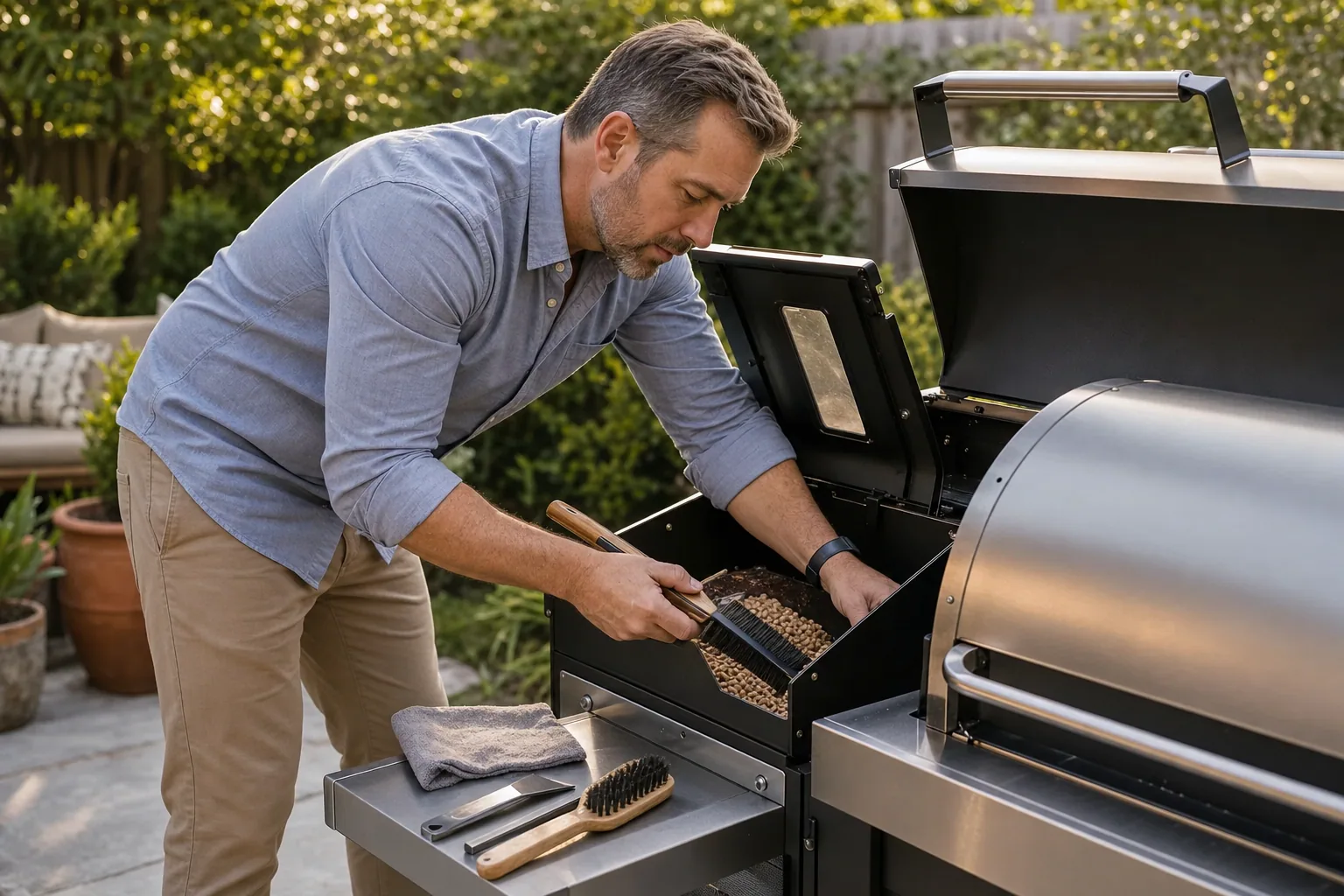
- Remove the grates and shake out any loose debris from inside the cooking chamber
- Wipe down the interior walls with a damp cloth to remove ash and grease residue
- Check the drip pan and empty it if it's full of grease and debris
- Inspect the heat diffuser plate and clean any stubborn buildup
A clean interior grill runs hotter, cooks more evenly, and produces better smoke flavor. It also helps you spot potential problems before they become serious.
Pellet Grill Not Smoking: Diagnose and Fix
When your pellet grill isn't producing the smoke flavor you expect, the issue usually traces back to one of a few common culprits.
Check Your Pellet Quality
Not all pellets are created equal. Wet, low-quality, or old pellets won't combust properly and will produce little to no smoke. Store pellets in a cool, dry place in sealed bags. If your hopper has been open or exposed to rain, empty it and start fresh. Buy fresh pellets from a trusted source and rotate your supply.
Verify Temperature and Smoke Settings
Many pellet grills have separate controls for temperature and smoke output. If you've cranked the temperature high, the grill may not spend enough time in the smoke-production phase. Lower the temperature setting and check your grill's smoke level option, usually marked as 1 through 9 or "low" to "high." Higher smoke settings mean more pellets are being burned for flavor.
Inspect the Fire Pot and Igniter
Ash buildup in the fire pot blocks airflow and smothers the flame. Remove the grates and heat diffuser, then use a small vacuum or brush to clear ash and debris from the fire pot. If you see white or gray ash coating the igniter, gently brush it clean. A weak igniter can struggle to light pellets, especially in cold weather.
Clean the Auger and Hopper
The auger is the spiral metal shaft that feeds pellets from the hopper into the fire pot. If it's jammed with sawdust or moisture-swollen pellets, pellets won't reach the fire pot and smoke production stops. Disconnect the power, remove the hopper, and clear any blockage by hand or with a tool provided by your grill's manufacturer.
Troubleshoot Temperature Swings and Inconsistency
Your pellet grill should hold temperature within a tight range, but sometimes it climbs too high, drops too low, or bounces around.
Empty and Refill the Hopper
Stale pellets or a mix of pellet types can confuse the grill's fuel delivery system. Empty the hopper completely, wipe out the interior, and refill with fresh, high-quality pellets. This simple step resolves many temperature control issues.
Check for Airflow Leaks
Pellet grills rely on controlled airflow to maintain steady heat. Inspect the grill's seals, especially around the door and the hopper. If gaps or cracks allow uncontrolled air in or out, the grill will struggle to stabilize. A grill cover also helps protect against wind, which can affect temperature consistency.
Calibrate the Temperature Probe
The internal thermometer tells your grill how hot it is and when to feed more pellets. If the probe reads inaccurately, the grill will overcompensate. Check your grill's manual for calibration steps. Some grills offer a simple calibration option in their control panel.
Clean the Convection Fan
Ash and grease can coat the fan that circulates heat and smoke. A dirty fan works harder and less effectively, leading to uneven cooking and temperature swings. Access the fan according to your grill's design, and gently brush away debris.
Pellet Grill Not Igniting or Starting Up
A grill that won't start is a serious problem, but the fix is often simpler than you'd think.
Confirm Power Supply and Control Board Connection
Check that your grill is plugged in and the outlet works. If your grill has a control board or digital screen, make sure all cables are fully seated. A loose connection can prevent startup even if power is available.
Test the Igniter
When you turn on the grill, listen for a clicking or buzzing sound coming from the fire pot area. That's the igniter trying to light the pellets. If you hear nothing, the igniter has likely failed and will need to be replaced. If you do hear it but no flame appears, the igniter may be weak or the fire pot may be blocked with ash.
Check for Auger Jams
If the auger can't turn, it can't deliver pellets and the grill won't light. Make sure the grill is unplugged, then manually try to rotate the auger by hand or with the tool provided. If it's stuck, disconnect the auger and investigate the blockage.
Verify the Lid Sensor
Most pellet grills won't ignite unless the lid is fully closed and the lid sensor registers that fact. Close the lid firmly until you hear or feel a click. Some sensors are mechanical switches you can test by hand, while others are electronic. Check your manual if you're unsure.
Seasonal Care to Prevent Problems
A little prep work at the start and end of grilling season pays huge dividends.
Spring: After the winter off-season, empty old pellets from the hopper and auger. Run a full cleaning cycle on the grill interior. Replace the drip liner if it's damaged. Test the igniter and controls before your first cook.
Fall: Before storing your grill, empty the hopper and run out any remaining pellets by turning on the grill until it stops. Clean the entire interior, including the fire pot and fan. Apply a light coat of high-heat oil to exposed metal parts to prevent rust over the winter. Cover your grill with a quality grill cover.
Know When to Call for Help
Some pellet grill issues, like a failed control board, a broken auger, or a faulty igniter, need professional repair or parts replacement. Prime Grill Shop carries premium pellet grills from trusted brands and offers full manufacturer warranties on eligible products. If you're unsure whether your grill needs professional attention or if you have questions about maintenance specific to your model, reach out to our U.S.-based customer support team at (720) 600-7228.
Regular maintenance keeps your pellet grill cooking beautifully and smoking perfectly. By staying on top of these tasks and addressing problems early, you'll enjoy reliable outdoor cooking and more time spent with family and friends.