
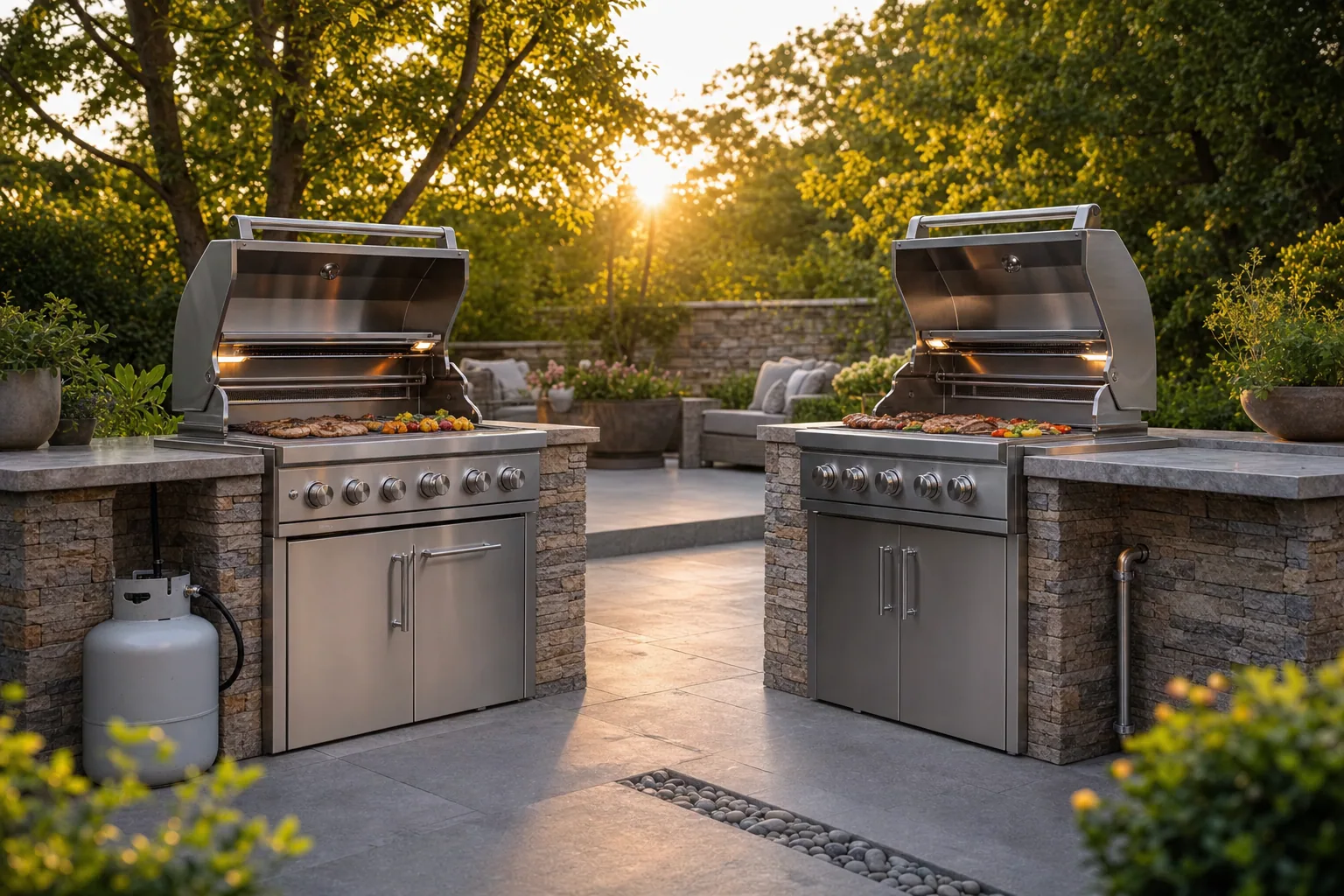
When you're shopping for a premium grill, one of the first decisions you'll make is choosing between propane and natural gas. Both fuel types deliver excellent performance, but they come with different tradeoffs in terms of convenience, cost, installation, and portability. Understanding these differences will help you pick the right fuel for your outdoor kitchen and entertaining style.
Understanding the Fuel Types
Propane and natural gas are both hydrocarbon fuels that work similarly in a grill. They both ignite to create heat, they're both controllable, and they both produce clean-burning flames without the smoke and ash of charcoal. The main differences lie in how they're delivered and stored.
Propane comes in a tank that you purchase, fill, or exchange at a gas station or fuel supplier. Natural gas is piped directly into your home from a municipal utility line, the same line that may already power your home's heating and hot water. If you're comparing propane vs natural gas grill options, the choice often depends on what's already available at your property.
Performance and Cooking Power
Both propane and natural gas grills deliver reliable, even heating for searing, grilling, and cooking at a range of temperatures. Many premium brands like Napoleon and TrueFlame offer models in both fuel types, so you can find comparable cooking performance regardless of which you choose.
One minor difference: natural gas lines deliver fuel at a lower pressure than propane, so natural gas grills sometimes feature larger burner orifices to compensate. This is a technical detail that rarely affects your actual cooking results. Both fuels ignite instantly, heat evenly, and allow precise temperature control.
The real performance advantage goes to whichever fuel type lets you use your grill consistently without interruption. Propane tanks can run out mid-cookout, while natural gas is always available as long as the line is open.
Convenience and Portability
Propane grills win decisively on portability. A freestanding propane grill with a cart can be moved around your patio, taken to a friend's house, or relocated if you redesign your outdoor space. As long as you have a propane tank nearby, you can grill anywhere.
Natural gas grills must be permanently installed where a gas line exists or can be run. This makes them less flexible, but it also means you never worry about running out of fuel or refilling a tank. If you're building a built-in outdoor kitchen with dedicated infrastructure, natural gas is often the more convenient long-term choice.
For most homeowners, portability and ease of use favor propane, especially if you're not ready to invest in underground gas line installation.
Cost Considerations
The cost comparison between propane and natural gas breaks down into two parts: initial purchase and ongoing fuel.
Initial grill cost is typically similar across brands, so a comparable Napoleon or TrueFlame model in propane and natural gas will cost roughly the same. Installation cost is where natural gas becomes expensive. Running a gas line to your outdoor kitchen requires professional installation, trenching, permitting, and inspections, often adding $500 to $2,000 or more depending on distance and local codes.
Propane grills require no special installation. Set up a tank, connect the regulator, and you're ready to cook.
Fuel cost per use is generally lower with natural gas, since utility rates are often cheaper than propane delivery. But the upfront installation savings with propane can offset fuel savings for several years, making propane the more economical choice for many homeowners.
Converting Between Fuel Types
One question homeowners often ask: can you convert a propane grill to natural gas, or vice versa?
The short answer is: sometimes, but not always. Some premium grill manufacturers design models that accept conversion kits, allowing you to swap between propane and natural gas burners and orifices. However, not all grills support this, and DIY conversion on an unsupported grill can damage the appliance or create safety issues.
If converting between fuels is important to you, check the product specifications before purchasing. Many grills are designed for one fuel type only. If you're unsure, reach out to Prime Grill Shop's U.S.-based customer support team at (720) 600-7228. Our experts can tell you whether a specific model supports conversion and what options are available.
Which Fuel Should You Choose?
Your choice ultimately depends on your situation and priorities:
- Choose propane if you want flexibility, portability, and simple setup without trenching or permits. Propane is ideal for most homeowners with freestanding grills who may move or redesign their space.
- Choose natural gas if you're building a permanent, integrated outdoor kitchen and already have a gas line nearby or are willing to invest in installation. Natural gas offers convenience and lower per-use fuel costs over time.
Both fuels deliver excellent grilling performance from premium brands. The difference is about how you want to use your grill and what works best for your property.
Making Your Decision with Confidence
Whether you're leaning toward propane or natural gas, Prime Grill Shop makes the selection process straightforward. We carry premium propane and natural gas models from trusted brands like Napoleon, TrueFlame, and Summerset. Every grill includes free shipping on all orders, full manufacturer warranty protection, and access to our U.S.-based customer support team.
If you're still weighing propane vs natural gas for your space, our founder Chad Franzen and our AI product expert are available by phone at (720) 600-7228 to walk you through the tradeoffs, compare specific models, and answer questions about conversion, installation, or anything else.
Your choice of fuel should support the entertaining and cooking style you love. With the right grill and the right support, you'll be grilling confidently for years to come.