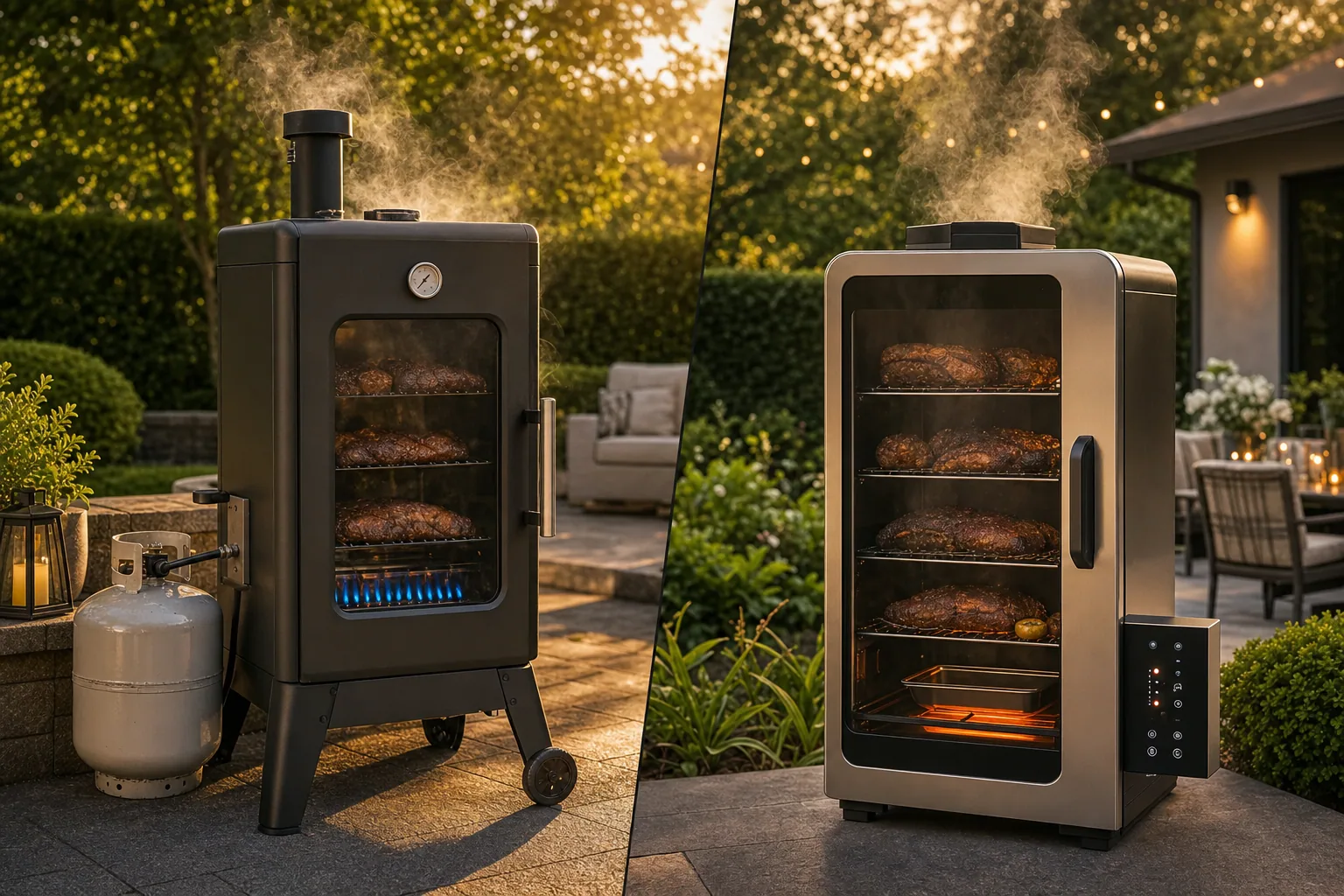
When you're ready to invest in a smoker, one of the first decisions you'll face is choosing your fuel source. A propane smoker vs electric comparison cuts right to the heart of how you'll cook, how much you'll spend, and what kind of flavor you'll get from your food. Both options have loyal followers and legitimate strengths, so let's break down what matters most for your backyard cooking.
Understanding Propane Smokers
Propane smokers run on liquid propane fuel, typically stored in a tank that connects directly to the smoker. They've been a backyard staple for decades, and for good reason.
With propane, you get reliable, consistent heat that you can adjust on the fly. If your temperature dips during a long cook, you can dial up the burner. The heat output is powerful and responsive, making propane smokers great for smoking large quantities of meat or for cooks that run long into the night.
Propane also gives you a bit more autonomy. As long as you have fuel, you can smoke anywhere on your property, at a cabin, or even tailgating. There's no need for an electrical outlet or an extension cord running across your yard.
Understanding Electric Smokers
Electric smokers are the newer player on the block, designed for convenience and ease of use. They rely on standard household electricity and heat coils or rods to create the smoking environment.
The biggest advantage of electric smokers is simplicity. Set your target temperature on a digital panel, and the smoker maintains it for you. There's minimal babysitting required, and temperature swings are rare. This hands-off approach appeals to newcomers who want to learn smoking without wrestling with heat management.
Electric models also tend to take up less space and weigh less than their propane counterparts. Cleanup is often simpler, and there's no fuel tank to manage or refill. For someone living in an apartment with a small patio or for a beginner wanting to test the waters, an electric smoker removes friction from the experience.
Propane vs Charcoal Smoker Considerations
If you're caught between propane, electric, and charcoal, it helps to know where charcoal fits. Charcoal smokers deliver authentic, deep smoke flavor that many purists swear by, but they demand more attention. You're managing coals, airflow, and temperature constantly. Propane sits between charcoal and electric in terms of effort and flavor. You get more control than electric and better flavor depth than some electric models, but less fussing than charcoal requires.
Fuel Costs and Long-Term Expenses
Cost is often the tiebreaker. Propane isn't free, but it's usually cheaper per hour of cooking than electricity in most regions. A full propane tank might cost $20-$40 and last through several smoking sessions, depending on how long you cook and how hot you run the smoker.
Electric smokers consume electricity at a rate that varies by unit wattage and your local utility rates. A 1,500-watt electric smoker running for eight hours could add $3-$5 to your electric bill, depending on where you live. Over time, if you smoke regularly, propane often comes out ahead financially.
However, remember the upfront investment. Electric smokers are typically cheaper to buy, while quality propane smokers and the tank itself represent a larger initial outlay.
Temperature Control and Cooking Performance
Propane smokers shine when you need flexibility. You control the burner intensity, so you can fine-tune your cooking environment. This matters if you're smoking for 12 hours straight or if you want to boost heat quickly.
Electric smokers excel at consistency. Once dialed in, they hold temperature with minimal drift. This reliability is perfect for set-it-and-forget-it cooks and for beginners who don't yet understand how to dial temperature.
For most smoking projects, both approaches deliver excellent results. The difference comes down to how hands-on you want to be and how much active monitoring you enjoy.
Flavor Profile Differences
Here's where things get interesting. Propane smokers, especially offset or barrel designs, tend to produce smoke flavor closer to traditional charcoal or wood-fired methods because the propane is just the heat source. The smoke flavor comes from wood chips or pellets you add to the cooking chamber.
Electric smokers also produce real smoke, but some users report a slightly different character because the heating method is more uniform and the smoke generation is often more passive. The difference isn't dramatic, and excellent smoked meat comes from both, but propane often edges ahead for deep smoke flavor.
Making Your Choice
Choose propane if you:
- Want the flexibility to adjust heat on the fly
- Plan to smoke in remote locations without power access
- Prefer deeper smoke flavor and more traditional results
- Don't mind managing a fuel tank
- Cook frequently or for long sessions
Choose electric if you:
- Value simplicity and hands-off cooking
- Are new to smoking and want to learn without stress
- Have limited space or live in a compact home
- Want the lowest upfront purchase price
- Prefer set-and-forget convenience
Both fuels deliver quality smoked food when you choose a well-built unit from a trusted brand. Prime Grill Shop carries premium outdoor cooking equipment including top-tier smokers and grills that let you cook the way you want. Whether you're leaning propane or electric, you'll find free shipping, full manufacturer warranties, and U.S.-based support behind every purchase, so you're investing in equipment that works and a relationship with a retailer who cares about your success.
The best smoker is the one you'll actually use. If that's electric because of your living situation or preference for ease, embrace it. If propane appeals because you love controlling every variable, go that route. Either way, you're making memories around great food and bringing family and friends together around your backyard.