
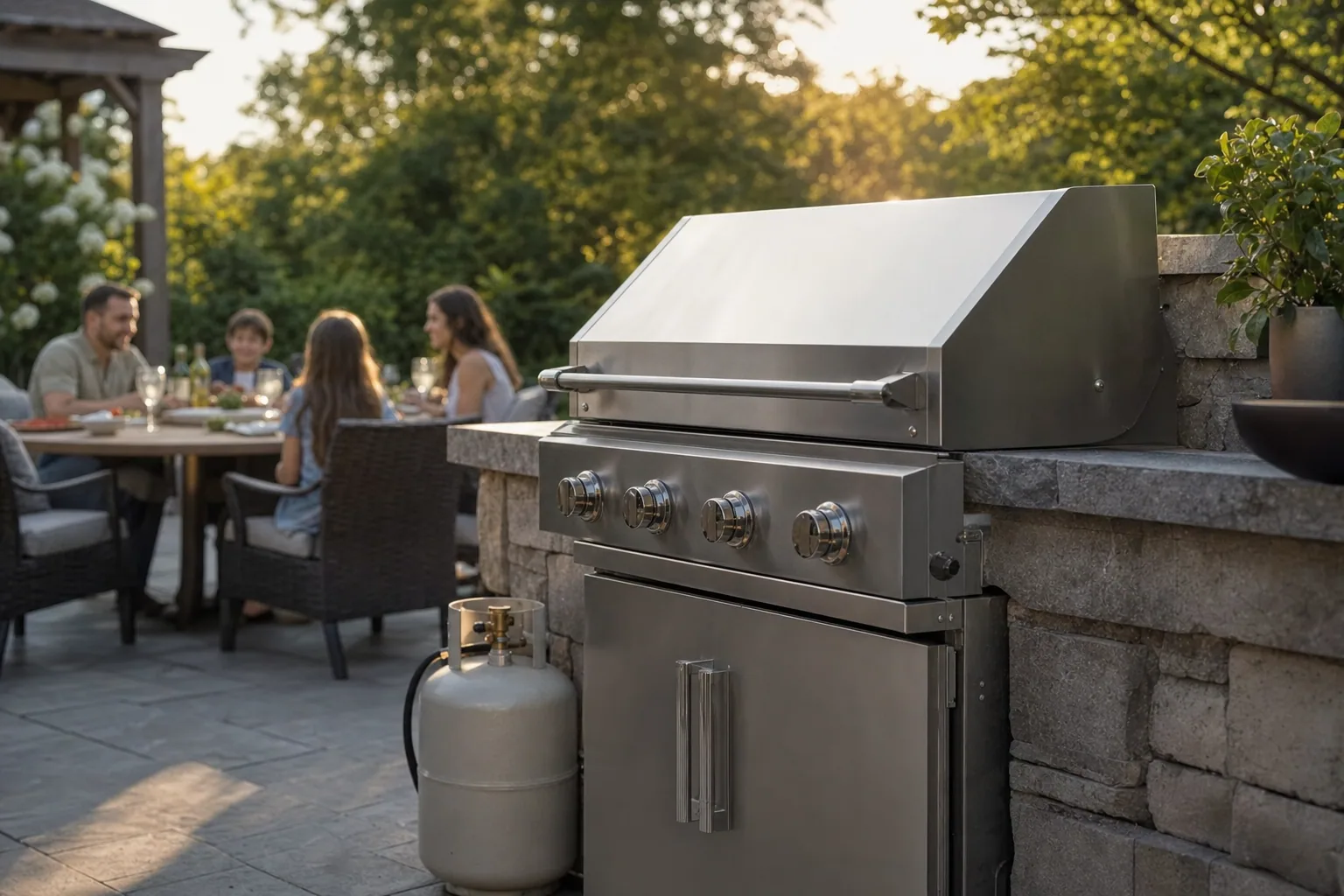
When you invest in a premium grill, understanding propane tank sizing becomes part of the bigger picture of getting the most from your equipment. The right tank size keeps you grilling without interruption, while the wrong choice can lead to frequent refills or unnecessary complexity. This guide walks you through the essentials so you can make a confident decision.
Understanding Propane Tank Basics
Propane tanks come in several standard sizes, each measured by weight when full. The most common sizes for residential grilling are 20-pound, 30-pound, and 100-pound tanks. A 20-pound tank is the smallest and most portable, often fitting under or beside compact grills. A 30-pound tank offers more capacity and longer run times between refills. A 100-pound tank is stationary and best suited for built-in installations or heavy-use situations.
The number on a propane tank refers to its water capacity (how many pounds of water it could hold), not the amount of propane inside. A full 20-pound tank holds roughly 15 pounds of actual propane, while a 30-pound tank holds about 24 pounds of propane. This is because tanks are never filled completely to allow for safe expansion.
How Long Does a Propane Grill Tank Last?
The lifespan of a propane tank depends on three main factors: tank size, grill burner output (measured in BTU), and how often you grill.
A typical 20-pound propane tank can fuel a standard grill for 18 to 20 hours of continuous use. If you grill for an average of three hours per week, a 20-pound tank should last about six to seven weeks. A 30-pound tank will extend that to roughly ten weeks under the same conditions.
However, real-world usage varies. If you only grill for 30 minutes at a time on weekends, a 20-pound tank may last several months. Conversely, if you entertain frequently with multiple burners running, you might refill more often.
High-output grills with 60,000+ BTU burners will drain a tank faster than lower-output models. Built-in grills that stay connected year-round may be better served by larger tanks to minimize service interruptions.
Matching Propane Tank Size to Your Grill
Choosing the right propane tank size for grill comes down to matching tank capacity with your grill type and cooking habits.
Freestanding and Portable Grills
Most freestanding grills, including popular cart-style models, work best with 20-pound tanks. They are compact, fit easily under cart shelves, and provide adequate runtime for typical backyard entertaining. If you grill frequently or host larger gatherings, consider stepping up to a 30-pound tank, which fits most cart designs with slightly more run time between refills.
Built-In and Permanent Installations
Built-in grills are ideally paired with 30-pound or larger tanks, depending on available space in your outdoor kitchen design. Because they remain in one location, size is less of a concern. A larger tank means fewer refills and more convenience, especially during peak entertaining season. Some homeowners with high-use built-in setups prefer 100-pound tanks for maximum fuel availability.
Hybrid and Multi-Appliance Setups
If you are running a grill alongside other propane appliances, such as an outdoor pizza oven or griddle, a larger tank becomes more practical. Multiple appliances drawing from the same tank will consume propane faster, so moving to a 30-pound or 100-pound tank prevents frequent refills.
Propane Tank Size Considerations
Before settling on a tank size, think about these practical factors:
Refill Frequency and Access: If your propane supplier is convenient and you do not mind regular visits, a 20-pound tank is manageable. If refills are inconvenient or you prefer not to interrupt your entertaining, a larger tank reduces hassle.
Space Constraints: Built-in grills have fixed cabinet space for tanks. Measure available room before ordering to ensure your chosen tank size fits the compartment.
Storage and Safety: Keep propane tanks away from heat sources, sunlight, and high-traffic areas. Ensure your storage space accommodates your chosen tank size without creating obstacles.
Weight and Handling: A 20-pound tank weighs about 35 pounds when full, making it easy to swap. A 30-pound tank weighs roughly 55 pounds, and moving it may require help. A 100-pound tank must stay in place and should only be connected by qualified technicians.
Seasonal Demand: If you grill year-round in a cold climate or entertain heavily during summer, a larger tank keeps you grilling without winter weather interrupting your supply chain.
Tips to Extend Propane Tank Life
Maximizing the lifespan of your propane supply makes grilling more enjoyable and economical.
Keep your grill clean and well-maintained. Buildup on burners or ports forces the grill to work harder and consume more propane to reach target temperatures.
Preheat your grill for only 10 to 15 minutes. Extended preheat times waste fuel without meaningfully improving results.
Use your grill's sear or high-heat burners strategically. Lower heat settings consume less propane while still delivering excellent food.
Invest in a grill cover or shelter. Protecting your grill from wind and weather prevents you from turning up the heat to compensate, which extends fuel life.
Consider propane tank swap programs at local retailers. These programs let you exchange an empty tank for a full one, avoiding wait times and ensuring you are never stranded without fuel.
Choosing Your Propane Grill
When shopping for a new grill, keep propane tank sizing in mind as part of the overall package. Premium grill brands like Napoleon, Summerset, and TrueFlame design their models with standard tank sizes in mind, and their specs clearly indicate recommended tank capacity.
At Prime Grill Shop, we carry a wide range of propane grills in different sizes and styles, and our team can help you match the right grill to the right tank size for your outdoor space. Whether you are building a built-in outdoor kitchen or upgrading your freestanding setup, understanding your propane needs ensures you get the full value from your investment.
Take time to assess your entertaining frequency, available space, and refill convenience. With the right propane tank size for your grill, you will spend less time thinking about fuel and more time enjoying time with family and friends.