
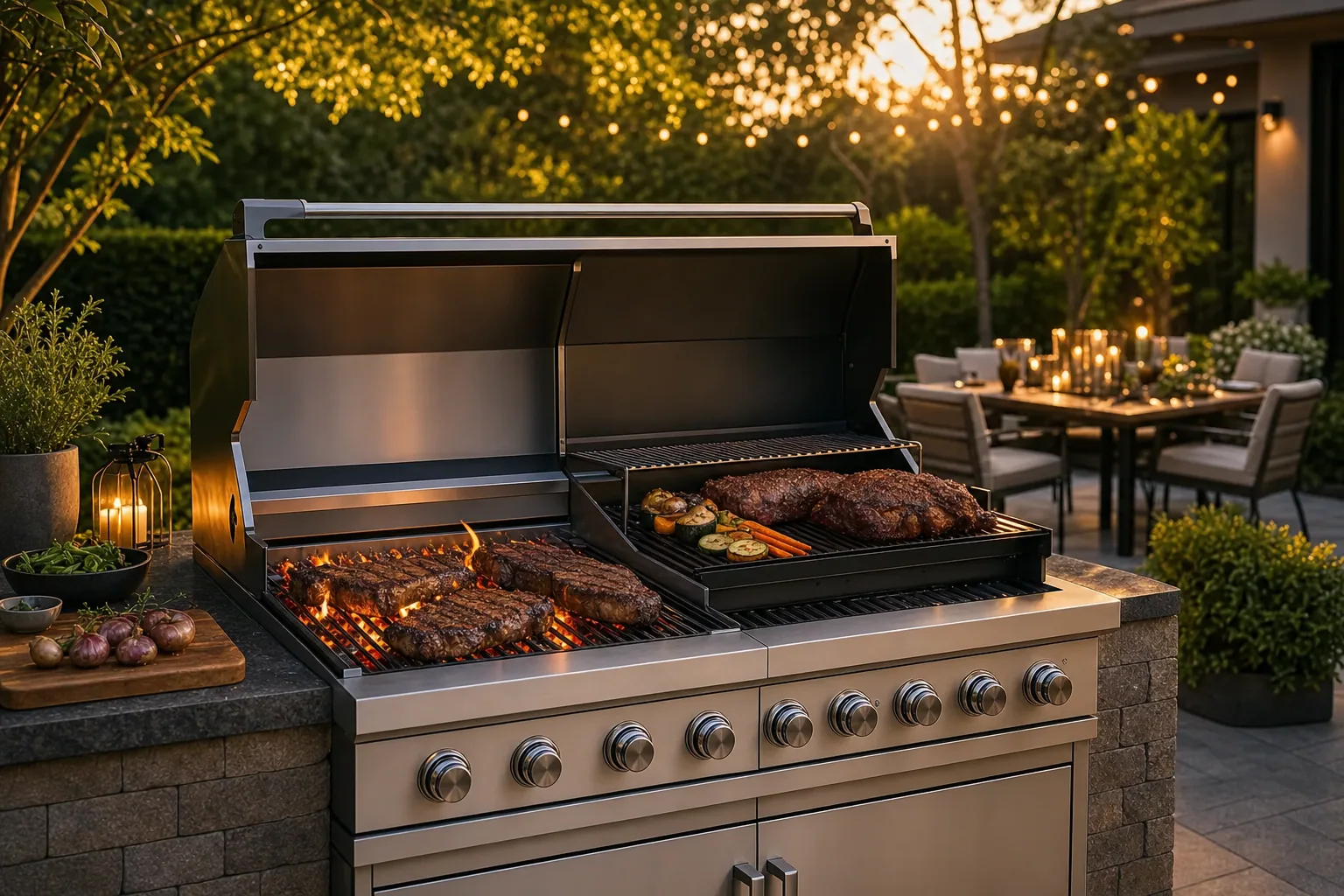
What is Two Zone Grilling?
Two zone grilling is a cooking method that divides your grill into two separate temperature areas: a hot zone for searing and a cooler zone for gentle, indirect cooking. This setup lets you nail both quick-sear dishes and slow-cooked masterpieces on the same cook, giving you complete control over heat and outcomes.
Instead of fighting with a single temperature across your grill, you're creating two distinct microclimates. This flexibility is what separates casual backyard cooking from truly intentional outdoor entertaining. Whether you're searing a prime steak or slow-roasting chicken thighs, a two zone grill setup works harder for you.
Why Two Zone Grilling Matters
The beauty of a two zone grill setup is simplicity and versatility. Home cooks often face a tough choice: crank the heat for a perfect sear, or lower it for gentle cooking. With two zones, you never have to choose.
Here's what a two zone setup does for your backyard cooking:
- Sear proteins quickly on the hot side without overcooking the inside
- Cook vegetables and delicate foods on the cool side without burning them
- Manage flare-ups by moving food away from direct flames
- Keep a safety zone while you rest and slice meat
- Cook for a crowd by managing different items at different speeds
- Develop better flavor through proper temperature control
This method is what separates home cooks who love their grill from those who feel frustrated by it.
Setting Up Your Two Zone Grill
The mechanics of a two zone grill setup depend on your grill type, but the principle is the same: light or heat only one side.
For Gas Grills
Gas grills are ideal for two zone cooking because you have precise burner control. Light only the burners on one side, leaving the other side off. This creates a hot direct-heat zone on the lit side and a cool indirect-heat zone on the unlit side.
- Set your hot side to medium-high or high, depending on what you're cooking
- Leave the cool side completely off
- Preheat both sides for 10 to 15 minutes so the grates distribute heat evenly
- Use the cool side for resting meat, finishing delicate items, or keeping food warm
Many premium gas grills, including quality options from Napoleon and Summerset available at Prime Grill Shop, offer excellent burner separation that makes this setup effortless.
For Charcoal Grills
Charcoal requires a bit more finesse. Push your coals to one side of the grill, leaving the other side empty. The heat will radiate across, creating a hot zone directly over the coals and a cooler zone on the empty side.
- Light your charcoal and let it ash over completely
- Push hot coals to one side using a poker or tongs
- Place food directly over coals for searing
- Move food to the empty side for gentler, slower cooking
- Add coals as needed to maintain temperature
Charcoal gives you beautiful crust and smoky flavor, and a two zone setup makes it much easier to manage.
For Pellet Grills and Smokers
Pellet grills excel at holding steady temperatures, making them perfect for low-and-slow cooking. To create two zones on a pellet grill, you'll want a deflector plate or heat diffuser on one side.
- Place the deflector on one side to block direct heat
- Keep the other side open for higher-heat cooking
- This setup mimics two-zone cooking by controlling how heat reaches the food
Mastering Temperature Control
Once your two zone grill setup is ready, temperature management becomes your superpower.
Invest a reliable thermometer. An instant-read thermometer tells you when your protein is done, while a grill thermometer at grate level helps you track each zone's actual temperature. This takes the guesswork out of every cook.
Start hot side hot. For searing, you want 400 to 500 degrees Fahrenheit or higher. This crust develops fast, locking in juices. About 2 to 3 minutes per side for a steak is typical, then you can move it to the cool side to finish gently.
Keep the cool side stable. Whether it's 250 degrees for low-and-slow smoking or 325 degrees for gentle roasting, consistency matters. A steady cool side lets you nail doneness without babysitting.
Rotate between zones as needed. Flare-ups happen. High-fat foods drip. Move them to the cool side instantly, and you avoid charred exteriors and raw interiors.
Common Two Zone Cooking Techniques
Mastering a few core moves transforms your two zone grill setup into a restaurant-quality cooking tool.
Reverse Sear: Cook your protein gently on the cool side first until it's nearly done, then move it to the hot side for a quick crust. This gives you edge-to-edge evenness plus a stunning exterior.
Hot Side Sear, Cool Side Finish: Sear on high heat for crust, then move to low heat to finish cooking through. Perfect for thick-cut steaks, pork chops, and chicken breasts.
Smoke and Sear: Use the cool side to smoke low-and-slow while the hot side stays ready for a final sear to add color.
Keep Warm Zone: While you're plating, rest meat and keep sides warm on the cool side. This prevents cold plates and rushed eating.
Invest in Equipment That Works
Your two zone grill setup is only as good as your grill. Look for grills with solid heat retention, quality grates, and independent burner controls so you can truly separate your zones.
Prime Grill Shop carries premium grills from trusted brands built for exactly this kind of precise, intentional cooking. Whether you choose a gas, charcoal, or pellet grill, you'll get free shipping, full manufacturer warranties, and U.S.-based support to help you master every technique.
Final Thoughts
A two zone grill setup is one of the best investments you can make in your backyard cooking. It removes the stress of temperature management, opens up new cooking possibilities, and lets you entertain with confidence. Start simple, practice the basic moves, and soon you'll find yourself cooking like someone who genuinely knows their way around a grill. That's when the real magic happens, and your backyard becomes the place where people want to gather.